
Latest News
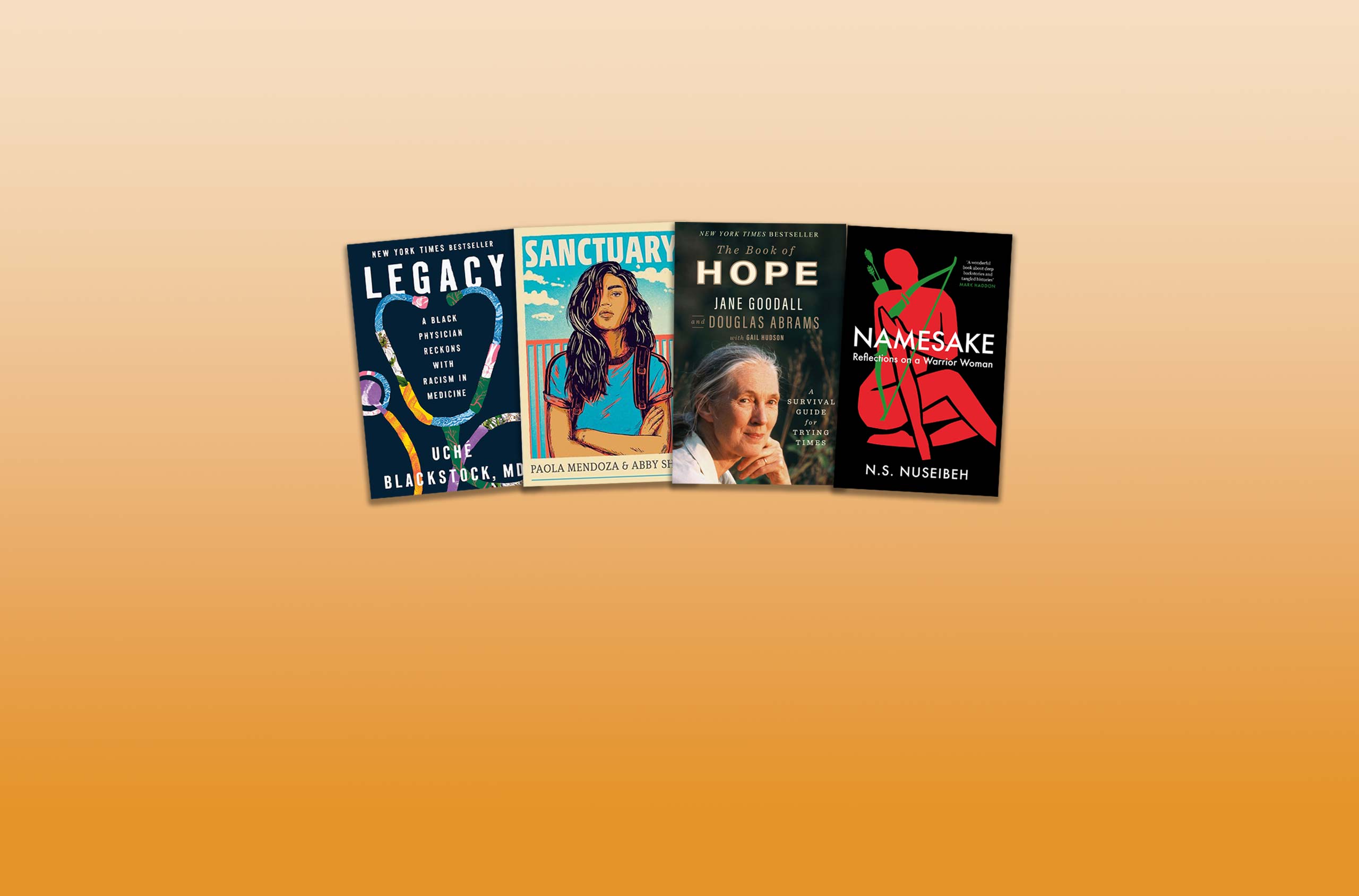
Nov./Dec. response: The 2026 United Women in Faith Reading Program
Consider Program’s History, Your Future
by Emilly Jones

Dear Readers:
Like so many of us, I find my attention pulled in a thousand different directions these days. The regular demands of work and family are ever present, while the news headlines come so rapidly that it’s hard to keep up. The cultural tendencies of this time invite us to flit quickly from one story to another, sampling information and taking in various soundbites—both social and spiritual. It is as though we have been tacitly instructed never to dive too deep and to click quickly past anything that doesn’t automatically arrest our attention. Amid the mental clutter of so many neon-bright attention grabbers, the choice to read a book in full, slowly and carefully, or, as the Reading Program suggests, to read at least 5+ books in such a manner annually, seems practically countercultural—and maybe that’s exactly what we need.
One of the greatest gifts of reading in this stage of life for me is the invitation to think slowly and deliberately, to tend to just one idea at a time, to lose myself in the author’s world, and to be fully present in what she is saying. Sometimes I find myself nodding along with an eager internal agreement, practically sighing with relief that someone else has articulated with such clarity what I feel like I’ve always known but have never been able to put into words. Sometimes, I find myself challenged, puzzled, even irritated and confounded, by ideas that are new to me, which rub up against my prior assumptions, and create some real internal friction. One of these feelings is easier to embrace than the other, but I know that both of these feelings—comfort and agitation—are helpful on the path of personal growth, a journey that lasts the whole of our lives.
Sometimes, the Reading Program feels like it harkens back to an earlier era. Indeed, in many ways it does. The history of the Reading Program is long and laudable. Reading has always been important to our organization. Maryann Verghese kindly pointed out a June 1876 issue of Heathen Woman’s Friend (yes, that was the name of the magazine!) that described a program of “Uniform Readings for Auxiliaries,” suggesting “the titles of helpful books of reference, such as may be found in school libraries and in those of ministers.” In 1922, the Woman’s Missionary Society of the Evangelical Association had 87,275 readers complete their reading course. Meanwhile, Audrie E. Reber, in Women United for Mission: A History of the Women’s Society of World Service of the Evangelical United Brethren Church, 1946-1968, describes at length “The Reading Course” of the women’s organization of the EUB, one of the churches that merged to form The United Methodist Church. She writes, “The women had always been encouraged to read both that they might know more about the mission areas for which the church has responsibility and that they might understand and care for people.” The women of that time, like our Reading Program participants today, were not just engaging in surface-level reading. The 1947 Reading Course list included: Dachau Sermons; Beyond Prejudice, A Story of the Church and Japanese Americans; Probing Our Prejudices; and other challenging and important texts. In 1968, titles included classics like Georgia Harkness’ Disciplines of the Christian Life and then cutting-edge documents like Church Women United for Peace from the National Council of Churches.
Our Reading Program foremothers relied on a group of readers. The readers indicated if the book was well written, relevant, and would contribute to education for mission. Age and environmental backgrounds had to be considered. Three readers had to approve the book for its acceptance. It was no easy job limiting the book list as to size.
This description will sound strikingly familiar to current Reading Program participants, and especially to our team of 175+ volunteer evaluators who serve in this capacity today. More than 46,000 people participated in the Reading Course in 1962, but shortly thereafter there were concerns—also not dissimilar to today—about the “overall trend of a decrease in disciplined reading.” Yet here we are, today, more than 60 years later. None of the 2026 Reading Program titles would be familiar to the 1947 or 1962 cadre of readers, of course—the Reading Program, then and now, is committed to uplifting contemporary work—but our purpose and posture would surely feel familiar.
Yet the Reading Program is not just about a powerful past; it is also about a powerful future. In a time where we are increasingly encouraged to learn—and even to think—in short, high-tech, low-attention bursts, the practices encouraged by the Reading Program are a welcome antidote. They are, I believe, a much-needed spiritual solace. It is humbling. To sit with a voice other than your own for an extended time is to admit that we have something powerful to learn from one another across our many differences. To read books, purposefully, is to acknowledge that not everything we need to learn can be communicated adequately in just a smattering of sentences and a rapid-fire splash of images. It is also deeply hopeful. When we dive deep, when we pay real attention, we discover that there is an incredible vastness and depth to the world around us and the world inside us.
Whatever level plan of the Reading Program you complete, we invite you to read each book in full and take time to reflect. Consider journaling or taking a prayer walk to reflect on what you read. Dwell in the details. Like Jacob and the angel, wrestle with the text—not with the goal of agreement or disagreement, like or unlike—but rather with the prayerful purpose of finding the blessing, the wisdom that God meant for you to receive.
If you are able, consider reading with others. The insights we glean from one another’s differing takes on a book can be just as valuable as what we read in the text itself. God speaks to us in many ways, and sometimes God speaks on the page, and sometimes God speaks God’s word to us from another woman’s lips. For this reason, learning together and listening to one another can be a form of sacred encounter. To help facilitate these sacred moments, we encourage you to join or form a local group to discuss a subset of the Reading Program books. You don’t need to be a United Women in Faith member to participate in the Reading Program, so please consider opening up these “Read Together” opportunities to nonmembers and potential members in your community. If you find meeting in the church to be a challenge, consider a nontraditional meeting location, like a public library, community center, or coffee shop. If you’d like to stretch yourself one step further and build an intergenerational experience, consider partnering with a local college campus, high school youth group, senior center, or retirement community. Many women are hungering for sisterhood and a good book; United Women in Faith can offer both, through your leadership.
Most importantly, whether you read alone or together, whether one book or 20+, I pray that your encounter with the 2026 Reading Program be a blessing on your journey.
Peace,
Emily
P.S. We periodically get questions from members about the history of the Reading Program. We would love to build a deeper repository of knowledge in this area. If you come across interesting sources about the Reading Program and its predecessor programs, please send us an e-mail. We’d love to learn from and with you all.
Thanks to Maryann Verghese, Barbara Campbell, and Sandy Wilder for providing me with valuable information about the history of the Reading Program, excerpts of which are included here.
EMILY JONES is United Women in Faith’s executive for Racial Justice.
