


Latest News
March/April response: Mary Elizabeth Inn
San Francisco National Mission Institution Is a Safe Haven for Women
by NILE SPRAGUE with AUDREY STANTON-SMITH

Photo: Nile Sprague
For 25 years, Chantal (who is using a substitute name) has lived at Mary Elizabeth Inn, a United Women in Faith National Mission Institution in San Francisco, California.
“Most of the people in San Francisco who manage any housing at this point in time are very wealthy,” the 84-year-old said. “The people who run Mary Elizabeth Inn don’t have wealth as their priority for being landlords, but basically, that’s what they are. They are landlords with big hearts.”
Those big hearts give Chantal and more than 70 other residents a safe and affordable place to live with supportive services to help clients achieve emotional, financial, and housing stability.
111 Years of Service
Founded by Lizzie Snyder Glide, Mary Elizabeth Inn has been transforming the lives of women since 1914, offering them a secure haven free from violence. It is one of the few residences just for women in San Franciso, and the only one that can accommodate women who are physically disabled.
“Our mission remains steadfast: to break the cycle of poverty and homelessness for women in the Bay Area, empowering women at all stages of life to achieve self-sufficiency and security,” explained Tanquiesha Kairy, executive director.
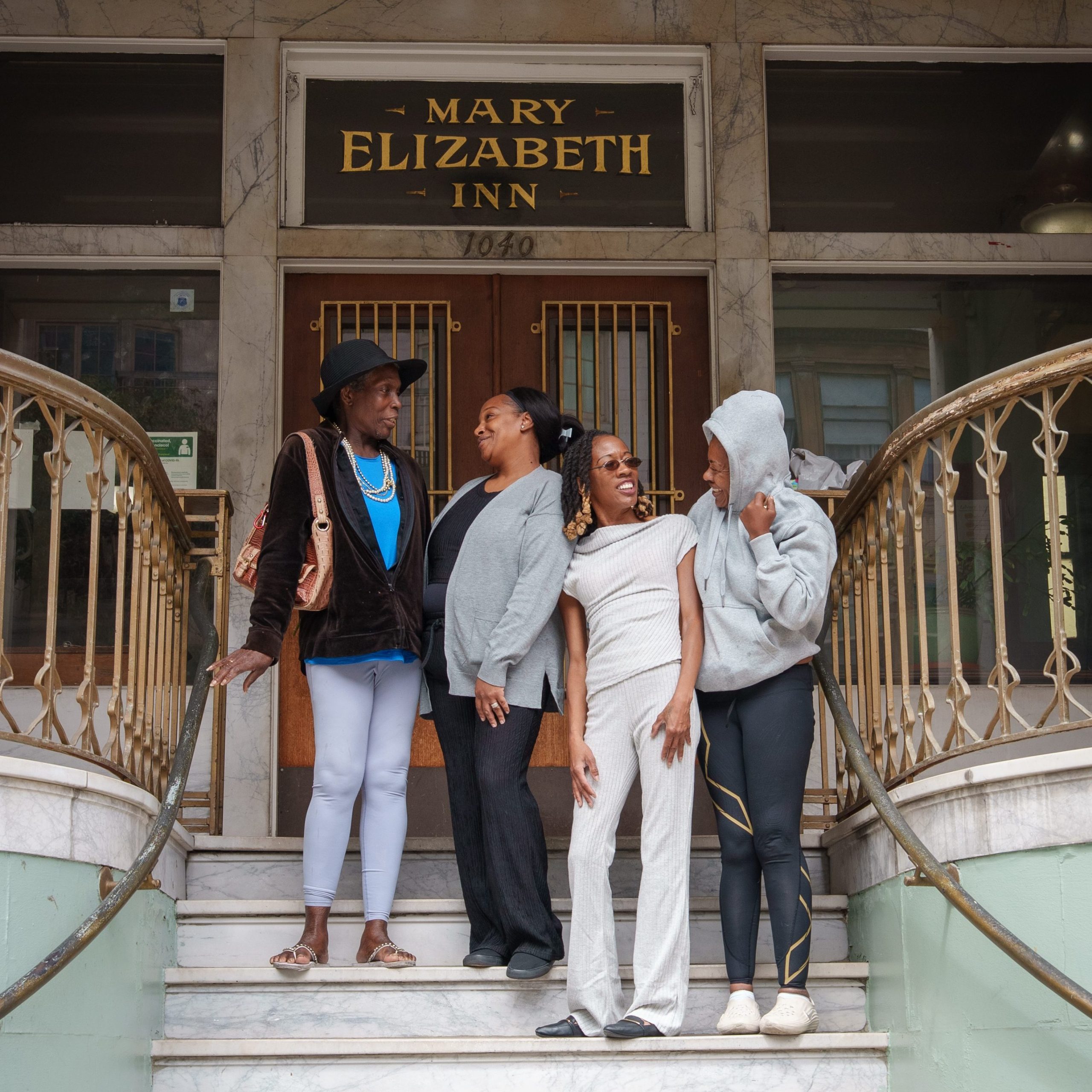
Kairy has been with the organization for 18 years, starting as a desk clerk and rising through various roles. She explained that rent is set at 30 percent of a resident’s income, so most residents pay an average of only $213 monthly and no one pays more than $503 monthly.
“We have women that come in who have been struggling with chronic homelessness, trust issues, and just really cannot find their place because a lot of them don’t want to stay in co-ed housing due to trauma,” Kairy said, adding that many residents have been victims of sex trafficking and violence and some have physical and mental disabilities. In addition to those challenges, residents represent diverse ethnicities, languages, and sexual orientations, including transgender individuals. MEI’s commitment to diversity and inclusiveness is a cornerstone of its mission.
“The area that we serve is to be able to help those women who face the most challenging situations,” Kairy said.
“To see them come and do well and be comfortable in this environment, and then to look at them from where they started to where they are now, I’m like, wow! … We were able to offer something that really helped them, and that’s one of the just greatest feelings.”
Kiwi, a resident who asked to withhold their last name, credits MEI with significant life changes, including the job they hold as an usher for a local event venue.
“This is the most stable housing I’ve had in my life,” Kiwi said. “I’ve lived multiple different places. I’ve been in and out of different sorts of housing. I’ve lived on the streets, but this has been the most stable housing that I’ve had.
“It’s made a huge difference on my mental health as well as my safety,” Kiwi continued. “Also, I’ve been able to maintain jobs and keep my stuff, material things, as well as just feeling good about where I live.”
Feeling good at MEI goes beyond simply having safe shelter and case management.
“I’ve done quite a bit of work on myself,” Kiwi said. “I decided that I didn’t want to keep repeating the same patterns, doing the same behavior, so I started going to workshops and therapy and things like that.”
Supportive Partnerships
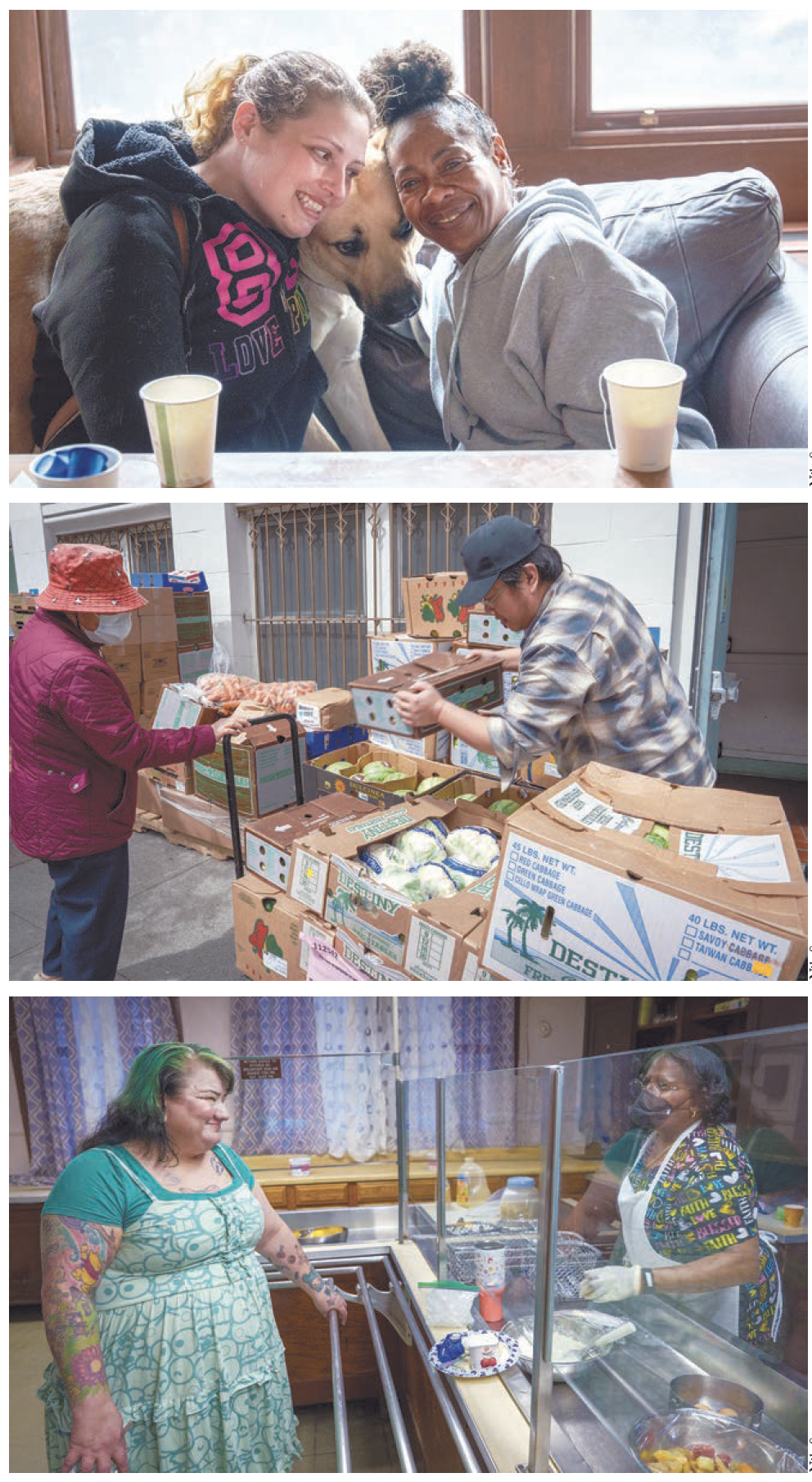
Shavone Watts, director of housing at MEI, said various programs include daily breakfast, weekly food runs (to collect food donated by local businesses), a food pantry, walking groups, a gardening club, a support group, and “Ask the Nurse.”
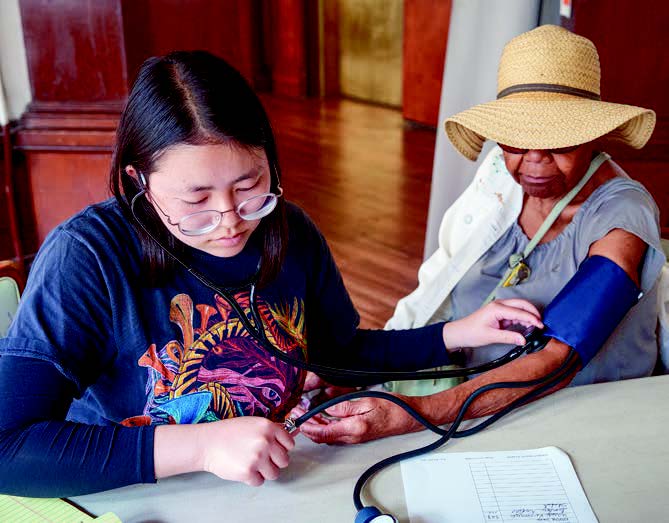
“We’re here to help low-income women with health problems,” said Nancy Hardies, a registered nurse on faculty at the University of San Francisco. Hardies was onsite supervising nursing students working with residents, as they do each week on Tuesdays and Thursdays. “We help by taking blood pressures and answering health questions, and, if we can, talk to them about their medications.”
It’s good experience for third-year nursing students Emily Tu and Gigi Segala.
“We actually talked to a woman today who expressed to us that her concerns for her health weren’t being heard out by her own primary doctor, and just by talking to us, she was able to feel validated in her concerns and even get references to resources that are nearby here,” Segala said.
“I think that’s one of my favorite parts about nursing—getting to connect with people and be that person who will listen and be there to support other people,” Tu added.
“That’s the whole reason why I went into this career, to make a difference, even if it’s as small as talking to someone,” Segala said. “Women who stay here, they deal with a lot, and so often they get pushed to the side or they get ignored. So being able to be someone to listen to their concerns and ease whatever they went through during their day or the other day, it’s really fulfilling.”
Vital Support
Though the nursing school partnership and other programs are successful, MEI still faces challenges.
“We’ve had a lot of cuts, and just our grants, our donors, you know, are not coming in as they used to,” Kairy said.
She explained that federal funding administered by the city and county only covers the unit costs and wages for employees.
Our kitchen and meals program operates solely on donations, so it’s really important that we receive donations throughout the year to make sure we have the cost to cover our meals program.”
Kairy said it takes about $1.6 million annually to operate the building.
“This year, along with the budget cuts and everything, we received so much less, and now we are looking for other ways to see how can we raise this money to continue to operate this program. So right now, we’re in desperate need, but we continue to remain positive and hopeful.
“We still have great support from United Women in Faith,” she added. “They’ve always been a part of the organization.”
Support from United Women in Faith comes in the form of annual grants, members on MEI’s board of directors, individual gifts from members and churches, and prayer.
“It’s not just financial support, but that connection to something that’s greater than what we are, and also to see that bigger picture of what’s going on, not only with our organization,” Kairy said. “This is something that United Methodist women have been doing for centuries, so I love that partnership, that relationship.”
United Women in Faith, Kairy and Watts said, is part of the MEI family.
“I’ve always enjoyed what I did, even when I first came here, just helping people, helping women, helping them stay housed,” Watts said. “My favorite part of my job when I did move-ins was handing them the key, and then they’ll turn around and open up the door, and they’ll go in their room, and they’ll be so happy, because a lot of them never even really just had their own space.
“It’s definitely not just a job. We all really feel like family.”
Nile Sprague is a California-based photojournalist. Audrey Stanton-Smith is the editor of response.
