

Latest News
May/June response: Celebrating 125 Years of Mission Study
Keyhole Missiology Book Examines Mission u History
by GLORY E. DHARMARAJ, PH.D.
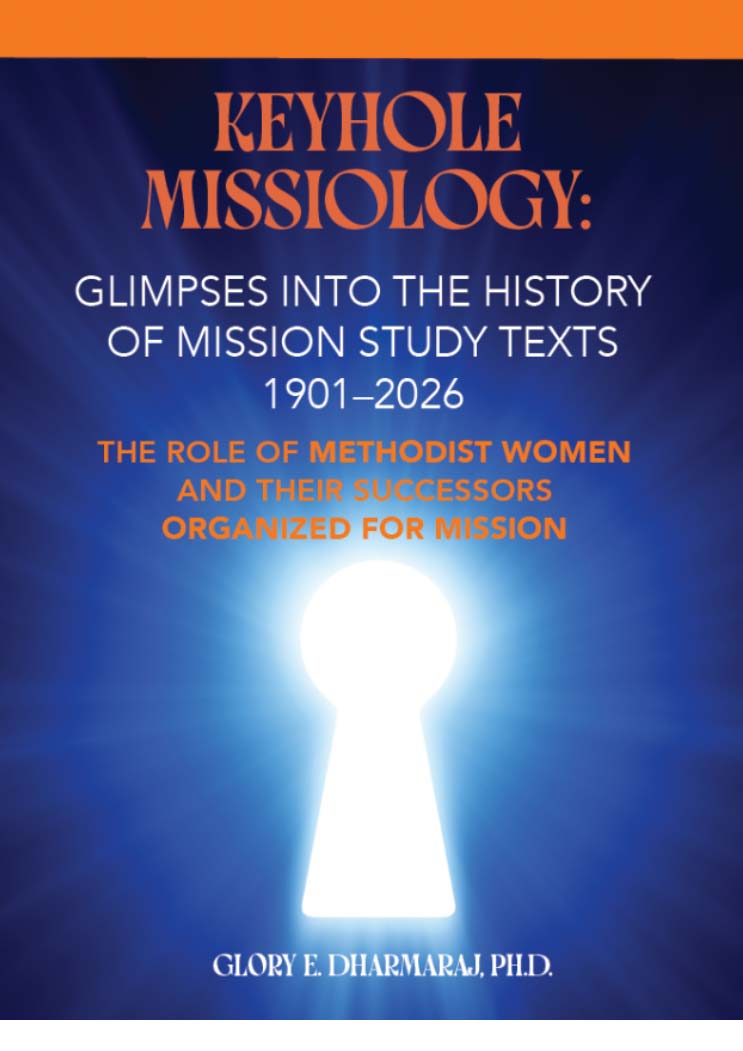
The publication of mission study books has turned 125 this year. Exploring this history is a recently published book, Keyhole Missiology: Glimpses Into the History of Mission Study Texts: 1901-2026: The Role of Methodist Women and Their Successors Organized for Mission. It has been my pleasure to write this anniversary text and gift it to United Women in Faith.
Twin Origin Stories
The story of eight founding matriarchs meeting in a small corner room of Tremont Street Methodist Episcopal Church, Boston, Massachusetts, on a cold and stormy day on March 23, 1869, is a familiar mission lore. How they started a mission organization called Woman’s Foreign Missionary Society, the earliest of several mission bodies that led to the formation of United Women in Faith, is a timeless story etched in our memory.
Equally inscribed in our memory is the story of this “handful of women” raising money independently, administering it, and sending out single female missionaries.
Regular giving undergirded this mission endeavor—two cents a week and a prayer—but was not limited by it.
However, there is an often-forgotten layer to this founding story. That is, for the founding mothers, sending single female missionaries abroad and spreading mission knowledge at home were inseparable undertakings. In fact, Clementina Rowe Butler, one of the founding mothers, even took the constitution and periodical of another denominational women’s mission board, and managed to carry them unwet on that rainy day into Tremont Church as a visual aid to emphasize the need for educating women in mission knowledge.
Informed Giving and Systematic Study of Mission
The result was the launching of a magazine, Heathen Woman’s Friend, in the same year (1869) that soon changed its infamous title to Woman’s Missionary Friend, the pioneer of the current response magazine. What is remarkable is that WMF even came up with a detailed plan for spreading mission knowledge, since there was a demand for it from the readers.
As a result, special columns in the magazine appeared under the title, “Uniform Readings” in 1879. These offered stories of modern mission movements, followed by a three-month course on foreign mission activities, and then stories of the denominational mission of the Methodist Episcopal Church. (Read more about our magazine’s history in this issue of response.)
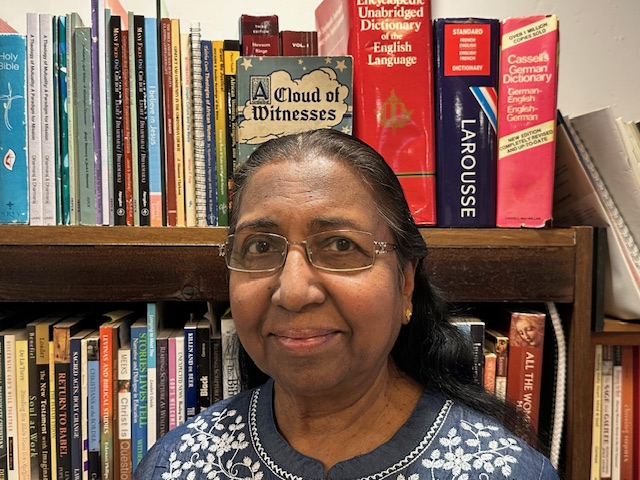
Photo: Courtesy Glory Dharmaraj, Ph.D.
Since each denomination and its women’s groups soon came up with their own respective journals, ecumenical women leaders decided to address this problem of overlapping publications. The outcome was the formation of the Central Committee on the United Study of Foreign Missions in New York in 1900. This committee came up with a plan for a systematic study of mission for women’s mission boards in the United States and Canada. Informed giving and systematic study of mission were twin undertakings in women’s mission.
Exploring Mission History Through Metaphorical Keyholes
Strolling through the narrative history of mission study texts is like taking a walk through a vast old house and ancient real estate. The chambers are so vast and expansive, and so richly stacked with books with generational understandings of Christian mission that one tends to look through the keyholes of the rooms, catch glimpses of the changing contours of the studies, and even investigate eyewitness accounts of mission.
The anniversary text invites readers to catch a glimpse of the first ever mission study book, Via Christi, written by none other than the editor of Methodist Woman’s Missionary Friend, Louise Manning Hodgkins. Published in 1901, it is about the journey of Christian mission from the time of the apostles of Jesus to the beginning of 19th-century mission. Stacked along this pioneering text are several place-based narratives in foreign mission. Some of them smack of triumphalist mission. Over the decades, stories of repairs and reparations reclaim the voices of the marginalized.
A milestone is Women and the Way: Christ and the World’s Womanhood (1938), telling the story of mission by non-Western women such as Madame Chiang Kai-shek. This is an anniversary text of 38 years of mission education to American women by the Central Committee on the United Study of Foreign Missions.
Remembering the Home Mission Study Texts
At home, the first ecumenical home mission study text, The Call to the Waters: A Study of the Frontier, was published in 1908. It is a story of how the settlers surmounted the frontiers from the Atlantic to the Pacific, and how Christianity spread with this westward march, and the impact of its presence and influence in shaping nationhood.
A glance at the home mission study texts offers the readers some of the timeless issues such as African Americans and racial justice, rural and urban concerns, immigration, rights of Native Americans, and restorative justice.
The impact of such studies enlarged the mental horizons of the Methodist women to such an extent that when the question of including women in the newly formed Commission on Interracial Cooperation came up in 1920, one of the founders of the organization, a white Methodist clergyman in Atlanta, Georgia, responded famously that the Methodist women with the “background of mission study” were the “Hindenburg Line in race relations and would be the last to succumb” (from Jessie Daniel Ames Papers, 1866-1972, #3686, at Wilson Library, University of North Carolina at Chapel Hill).
The home mission landscape sheds light on timeless social justice issues including poverty, immigration, migration, health care, and restorative justice. Foreign mission and home mission studies were integrated under geographical and social justice issues by a growing understanding of mission by the beginning of 1940.
Spiritual Growth Studies Undergirding Mission
The year 1940 ushers in a new era in the Methodist Church due to mergers. Nurtured by the truth that “we cannot go further until we go deeper,” members of Woman’s Society of Christian Service, forerunners of United Women in Faith, were equipped by a steady stream of spiritual growth studies for the changing times. A pattern continued to this day, strengthening the reading community’s mission spirituality.
For a long time, geographical and issue-based mission studies and spiritual growth studies were steady offerings. Members were offered to choose two studies at the spaces created for learning during summer and beyond.
Mission u
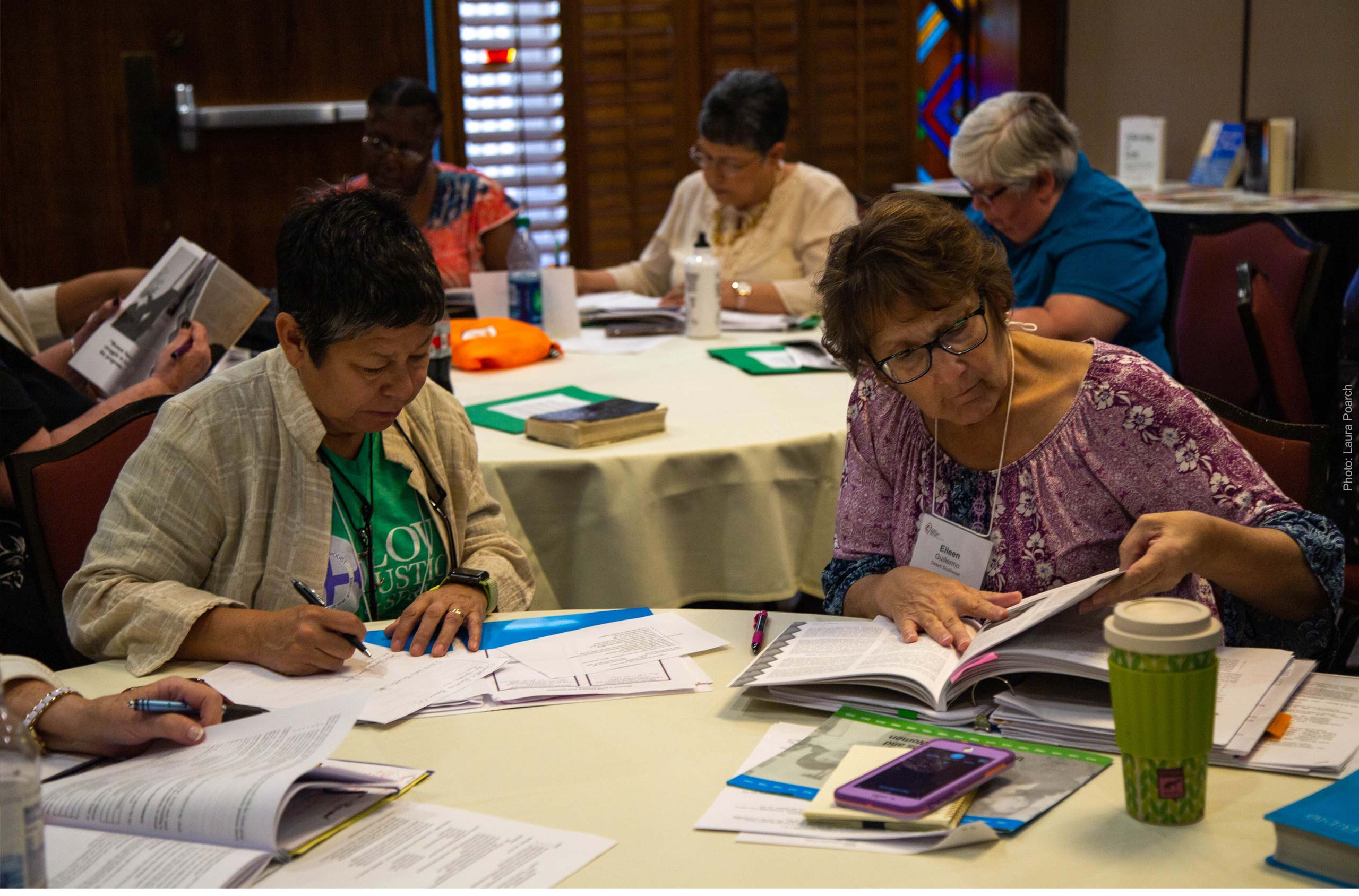
The origin of creating such learning spaces goes way back to 1904, the year when the Central Committee on the United Study of Foreign Missions started ecumenical summer schools of mission. For facilitating mission studies, women used the several camp meeting sites owned by the Methodist Church, conference spaces, and assembly grounds.
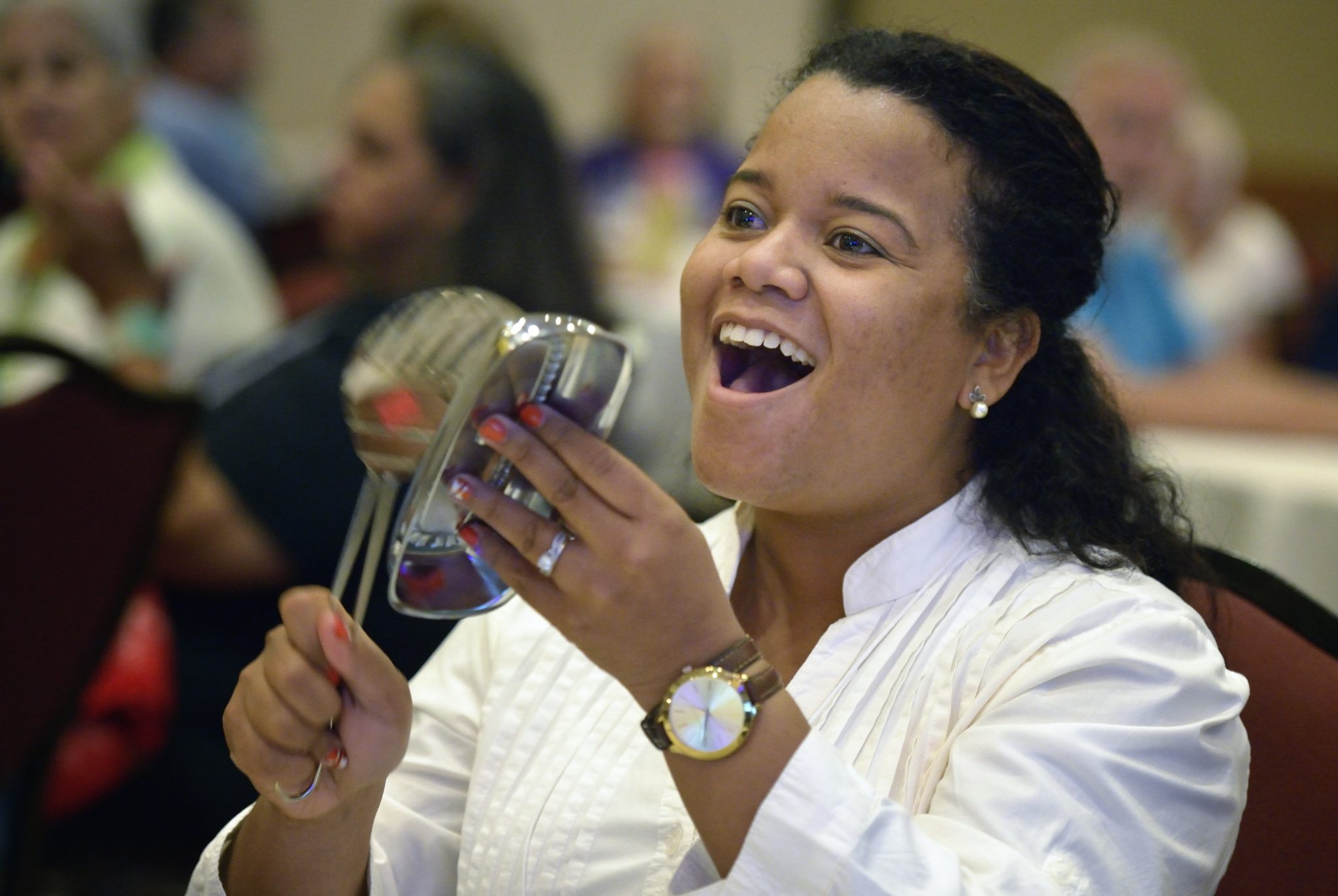
The Schools of Christian Mission currently known as Mission u events are presently held in hotels and on college campuses. Affectionately called a “university without walls,” these are often the best kept secret in the church!
Women Shaped by Stories of God’s Mission
In this year of the 125th anniversary of the publication of the first mission study text, let us take a journey with the mission study texts connecting with stories of resilience, resistance, repair, and hope. Let’s reach out across time and space and tap into the storehouse of intergenerational mission knowledge. Let’s pay attention to the cautionary tales to avoid the traps of domineering mission. Let’s embrace stories of participatory mission. Surrounded by so great a cloud of witnesses and walking in the light of God, this journey is also living out our identity as women shaped by mission.
There is an Armenian saying about storytelling: Three apples fell from heaven: one for the storyteller, one for the listener, one for the eavesdropper. Storytelling takes a teller. Every teller needs a story, a listener, and an eavesdropper. An untold story remains incomplete. We are inheritors of the wisdom of mission knowledge. It is upon us to figure out which stories need to be told now. Which stories do we live into? Which stories do we strategically abandon?
Experiencing God’s mission is a grace event. Storytelling under so great a cloud of witnesses is still a calling. Mission u offers a platform for such storytelling in community. As inheritors of the history of 125 years of mission studies, we have a treasure trove of written stories of mission encounters with the world here and far. Interspersed with skits and dialogues, this anniversary text enables the readers to be memory keepers.
This book is included as one of the texts for this year’s mission study. It is also included in the 2026 Reading Program. I invite you to buy this anniversary text, Keyhole Missiology: Glimpses Into the History of Mission Study Texts: 1901-2026: The Role of Methodist Women and Their Successors Organized for Mission from Amazon.com. One hundred percent of the sales of the book will go to support United Women in Faith. This is my loving free will gift to United Women in Faith.
Glory E. Dharmaraj, Ph.D., is the retired director for Mission Theology and Spiritual Formation, United Women in Faith. She is the author and co-author of influential books on mission, including Concepts of Mission, A Theology of Mutuality in Mission: A Paradigm for Mission in the Twenty-First Century, and Many Faces, One Church: A Manual for Cross-Racial and Cross-Cultural Ministry.
