

General Conference
What happens at annual conference?
Being part of your United Methodist annual conference is an important way to shape the work of the church
by Tara Barnes
In The United Methodist Church, annual conferences meet as annual conferences at annual conferences. Yes, I said that right!
A United Methodist annual conference is a geographic body, organizational body, and yearly meeting. Important decisions get made at the yearly meeting about what the people within the geographic boundary can do as an organization to share Christ’s love with the world.
If you’re United Methodist, you belong to a local church, which, along with other local churches, is part of a district. A collection of districts makes up an annual conference. (In the United States, annual conferences are then part of a jurisdiction, which is part of the U.S. Regional Conference, which is part of the worldwide denomination.)
United Methodists have established this structure to be connectional—not only with one another but with how we practice our faith in the places we live. And what a wonderful thing to be a church that makes decisions together! It just takes some coordination to do so.
Women in The United Methodist Church
Thanks to our friends at the General Commission on the Status and Role of Women, we know that membership in The UMC is around 58 percent women. We also know women are not 58 percent of the church’s leadership.
Women are 33 percent of the General Secretaries, though I should note that two of the agencies led by women have “women” in the agency name itself. Women are 32 percent of our clergy and 37 percent of our active episcopacy. And at the most recent General Conference, 42 percent of the voting delegates were women.
In our presentation to the 2024 General Conference, United Women in Faith posed this question: What would the church look like if women were 58 percent of the General Conference? What would the church look like if we women were equitably represented in decision-making spaces?
Who attends annual conference?
The short answer: Active and retired clergy, lay members to conference, your bishop, conference staff and officers, pages, volunteers, visitors.
All clergy are required to attend annual conference. And because we’re a denomination that values the ministry of laity, each annual conference is supposed to name an equal number of voting lay members as well.
This means for every clergyperson at your church, you also send a layperson. If your church has three clergy members, for example, your church will also send three laypeople to conference. You elect your lay representative(s) at your local charge conference.
However, deacons and elders can vote into retirement, so annual conferences need to come up with a formula to also name an equal number of lay members as there are retired clergy in your conference. This is called lay equalization. To quote ¶33 of The Book of Discipline of The United Methodist Church (2020/2024), “If the lay membership should number less than the clergy members of the annual conference, the annual conference shall, by its own formula, provide for the election of additional lay members to equalize lay and clergy membership of the annual conference.”
That paragraph also names some specific folks who must be lay equalization voters, including United Women in Faith conference presidents and active deaconesses and home missioners.
Many annual conferences will name other voting lay equalization members by virtue of their office. They’ll invite all district presidents of United Women in Faith and United Methodist Men, for example, or the chairs of conference boards and teams, or the elected delegates to General and Jurisdictional Conference. If you serve on a conference team, board, or committee, check your conference rules to see if you’re a named voting member. We don’t want to leave any seats empty!
Most conferences give a certain number of “at large” equalization spots to each district to elect representatives as well. Some conferences invite additional members based on church size and/or apportionments paid.
Check out our list on the Influence: UMC page on United Women in Faith Digital to see which annual conferences invite United Women in Faith leaders voting membership by virtue of office.
In addition to voting members, your bishop will also be in attendance to preside over the proceedings as your legal chairperson. Other officers—the conference secretary, treasurer, lay leader, and chancellor—will also be there, as will volunteers to help with registration, meals, greeting, guiding, workshops and outreach opportunities, etc. There will be pages to help you receive needed materials and to count votes if needed. You’ll also have visitors, including fellow members of your annual conference and staff from UMC agencies and conference partners, especially if you have an exhibit hall or display area.
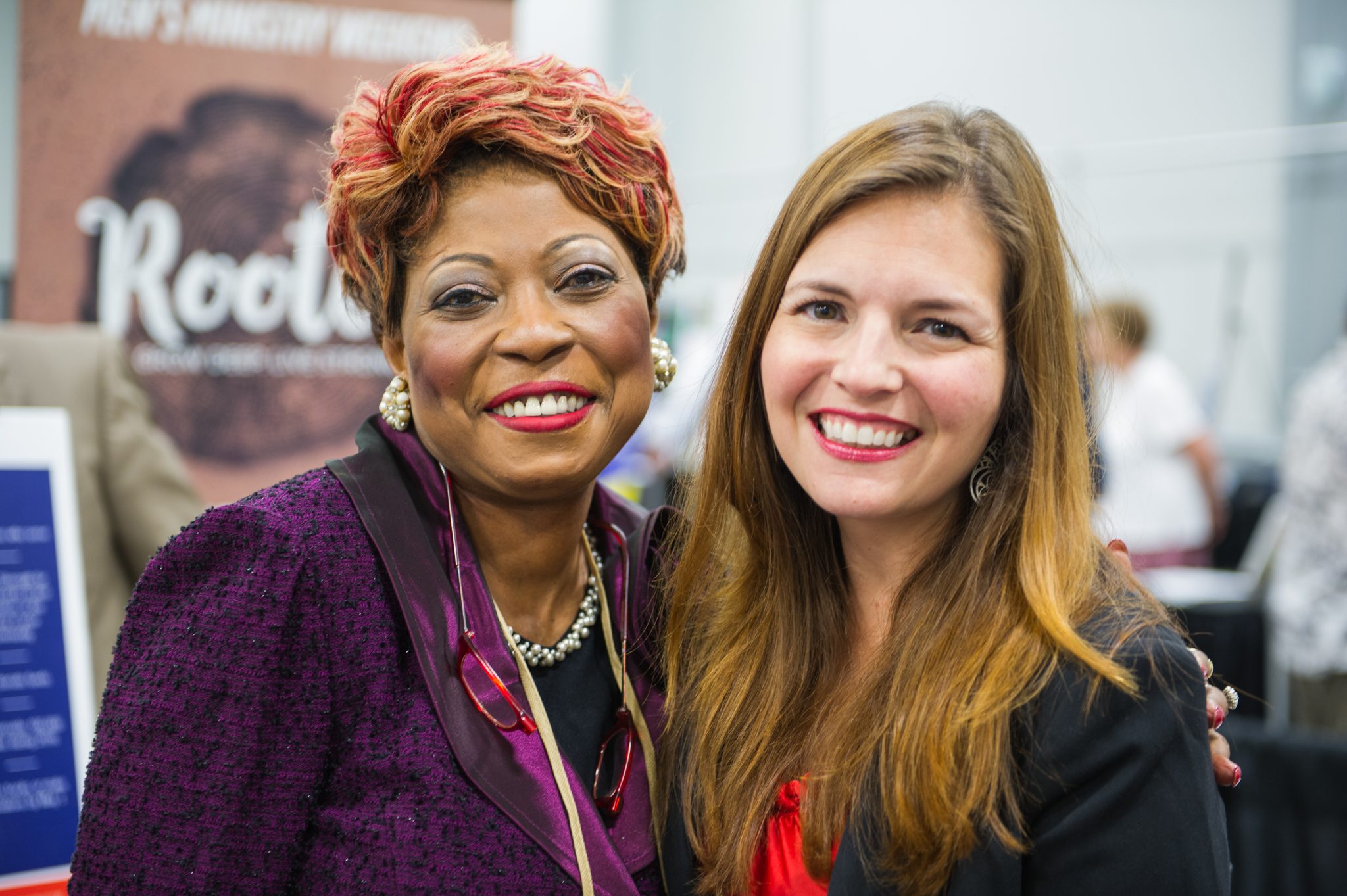
Join the United Women in Faith Digital space “Influence: UMC,” to find helpful resources, news, and information about using your voice in The United Methodist Church and connect with other women called to leadership in the church.
Photo by South Carolina Annual Conference.
Where is annual conference?
Depending on the size of your conference and its geographic location, you may meet at a hotel, a college campus, a convention center, a camp or retreat center, a church, or other large meeting space. The Susquehanna Conference even meets in a theater!
Some conferences offer round tables or set up classroom style with straight tables. Others set up the space in rows of chairs, and some may have church pews. If your website or pre-conference workbook doesn’t share the type of seating that will be offered, check with your conference office—it will help you know how to pack for each day.
You’ll want to bring your conference workbook and a way to take notes. You’ll likely also want a snack and beverage handy. The meetings can be long and can sometimes move quickly, so planning ahead for your own comfort is always a good idea. Dress in layers and wear comfy shoes!
What do you do at annual conference?
Now that we know who will be in the room and where that room may be, let’s talk about what you’ll do together:
- You’ll worship together.
- You’ll have a laity session and clergy session.
- Your bishop will give a message.
- You’ll probably have a memorial service and a service of commissioning and ordination.
- You may have a Bible study or learning session.
- Some of you may have the chance to take workshops or volunteer in the community.
- Some will have a bookshop or exhibit hall—most should have display tables of some kind.
- There will likely be some sponsored meals.
- And you’ll do business.
- During the laity session, laity will meet for a time of learning and fellowship. Clergy have their own separate session as well to decide matters of ordination, character, and conference relations. Those up for commissioning and ordination as deacons and elders are also approved in the clergy session.
What is the business of annual conference?
During business sessions you will hear presentations and reports and vote on recommendations and resolutions.
You’ll hear informational reports from conference groups like United Women in Faith, Commission on the Status and Role of Women, Camp and Retreat Ministries, missionaries you may sponsor, youth and young adult ministries, conference mission partners and seminaries, scholarship recipients, and others. You’ll receive and vote on recommendations from the committee on nominations, board of pension and health benefits, commission on equitable compensation, and conference trustees. And you’ll vote on the budget proposed by the board of finance and administration.
You’ll also vote on resolutions and petitions. Resolutions and petitions are submitted by individuals and groups within the conference seeking united stances and actions on religious and social issues.
You will want to purchase or download your conference’s workbook as soon as it’s available to familiarize yourself with all on which you’ll be voting. The workbook is where you’ll find the text of the reports and petitions along with a lot of other helpful information. This will be shared on your conference’s website, most often on the annual conference event page itself. Don’t wait until the night before!
The workbook should share who submitted the report and petition. If you have a question or concern, it’s okay to reach out to that person or group ahead of time. You’ll have time to ask during the conference discussion itself, but it’s better to do as much before the meeting as possible.
Before voting, you’ll have a chance to discuss the report or resolution and ask questions. Your conference will have an established set of rules it follows for procedure and discussion. You can find your conference’s rule in your most recent journal. Some of you may have them printed in your pre-conference workbook. Or you can reach out to me or your conference secretary if you’re looking for your rules.
Did you know that 11 annual conferences are electing their delegates to the 2028 General Conference this year? Find out if your annual conference will be holding elections and learn more about General Conference and becoming a delegate in “Getting Women in the Room Where it Happens.”
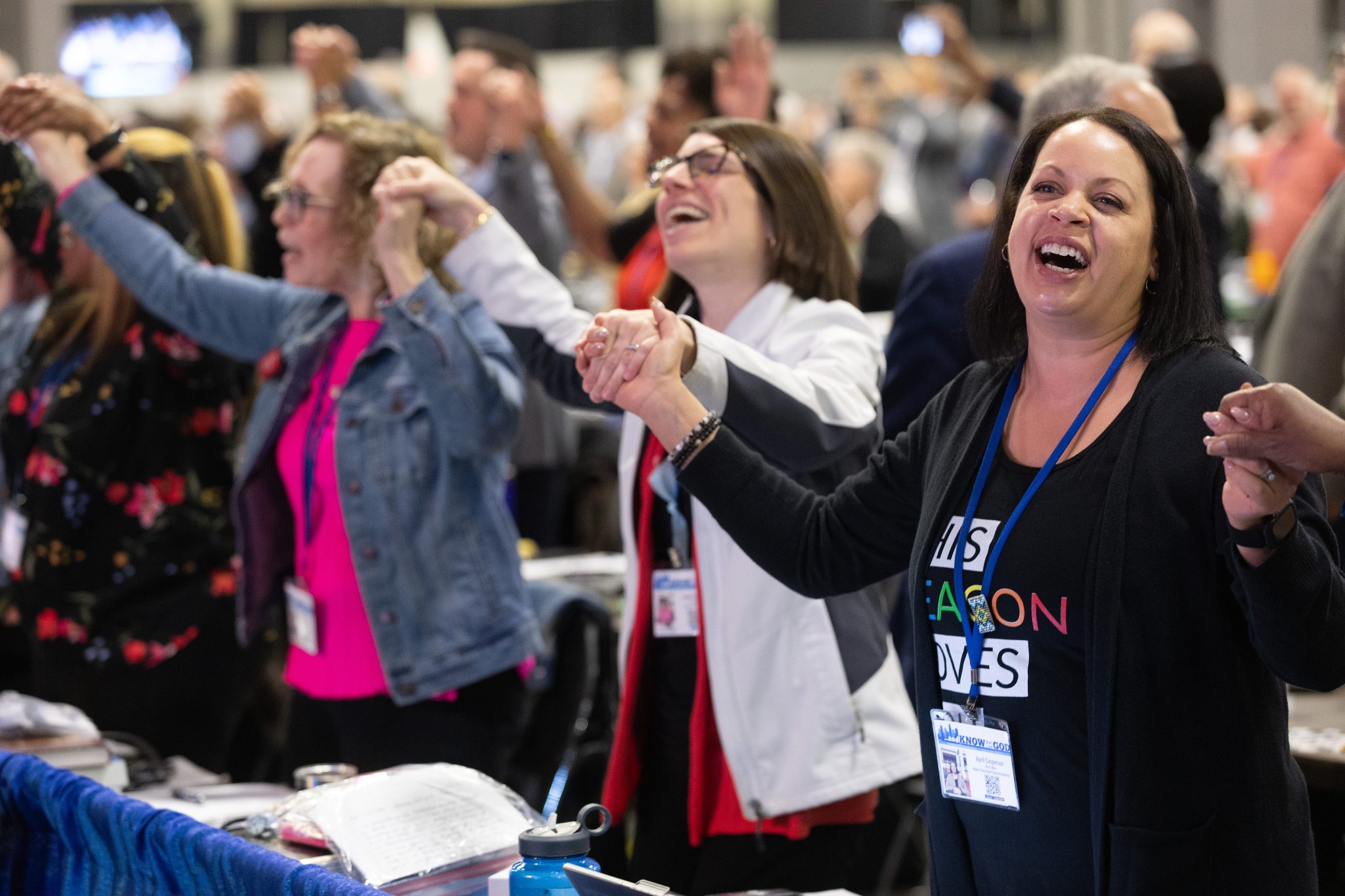
Photo by Mike DuBose for United Methodist News.
Your business will most likely be governed by the rules of the most recent General Conference as well as Robert’s Rules of Order.
All of these rules and procedures can be a bit intimidating—but don’t let having the exact right language prevent you from speaking—your bishop as the presider will likely help you get it right.
When you speak, be sure to follow your conference’s guidelines of how to identify yourself: Likely your name, church, lay or clergy status, and how you identify your race and gender. This is to help support our friends at the General Commission on the Status and Role of Women and General Commission on Religion and Race, who are mandated with monitoring our United Methodist conferences to ensure inclusion.
We know sometimes women aren’t always given—and don’t always take—their fair share of time at the microphone. Let’s make sure we show up.
GCSRW monitors are also there to help if gender discrimination or harassment happens at any time during the meeting. Don’t be afraid to report!
Use your voice
Members of United Women in Faith make wonderful members of the annual conference. You’ve studied Scripture through Mission u studies, the Program Resource, and response magazine Bible studies. You’ve listened to different experiences and perspectives through the Reading Program and Faith Talks. You know the value of leadership through the officer positions you hold, the events you organize, and the trainings you attend. You are spiritually grounded. You uplift the marginalized. You know what money can do. You have a supportive sisterhood and nationwide network as partners. Most of all, you have faith in God’s abundance and love and act so that others can know it too.
If you don’t already have a seat at your annual conference, you can serve as your local church’s lay member to conference or as a district lay equalization member. Learn more about how to do this in our article “Take Action: Vote at Annual Conference.” Registration for your annual conference may already be open or will open soon, so be sure to fill your seat!
Tara Barnes is the director of denominational relations for United Women in Faith.
Cover photo by Michigan Annual Conference.
