

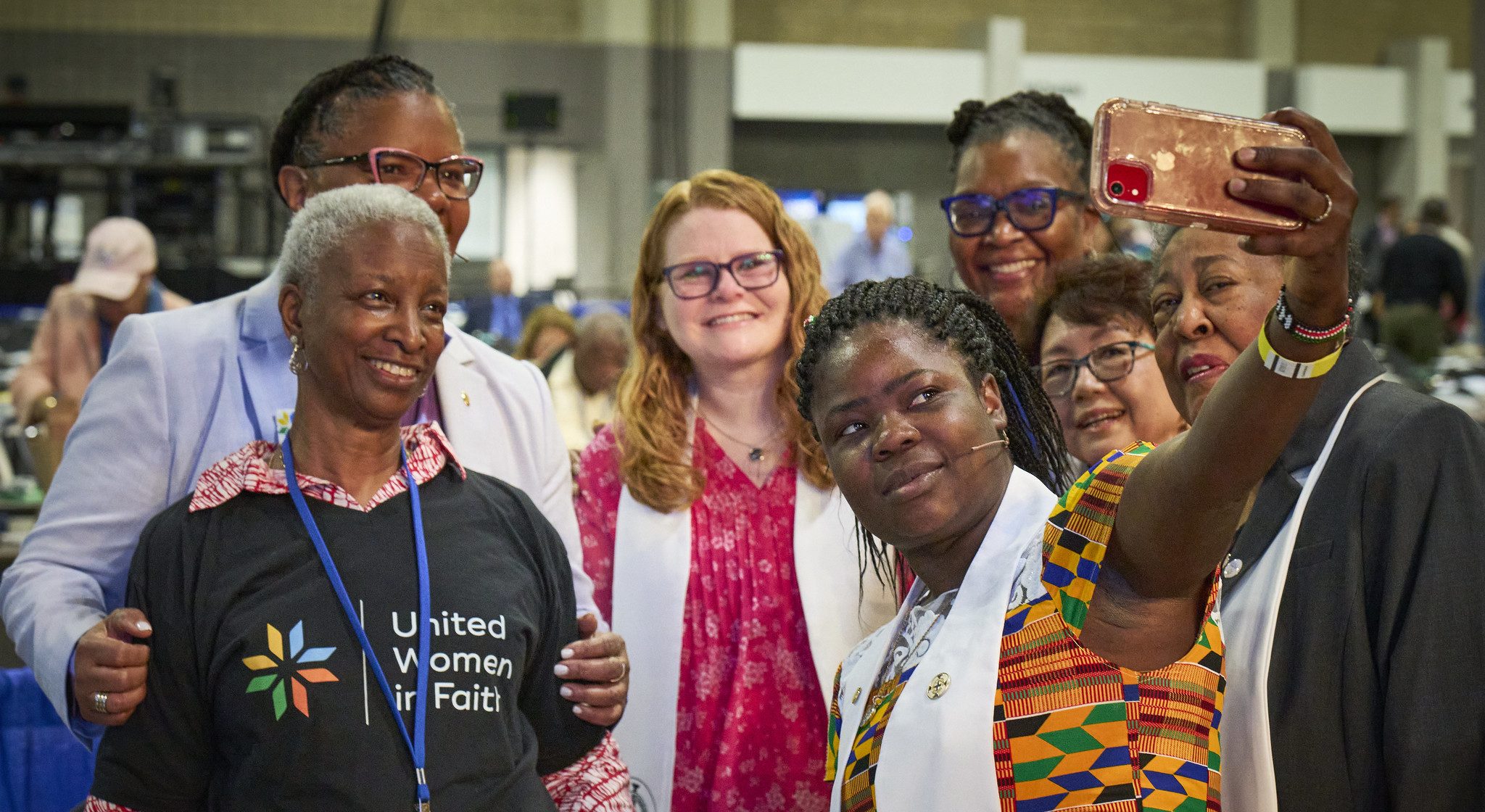
General Conference
Getting women in the room where it happens
Becoming a General Conference delegate
by Tara Barnes
The next United Methodist General Conference is scheduled for May 8-18, 2028, in Minneapolis, Minnesota. This meeting may be a few years away, but the time to start thinking about becoming a delegate is now.
What is General Conference?
Every four years The United Methodist Church holds its General Conference, the top policymaking body for the denomination. Delegates from around the world gather for 10 days to set denominational policy, revise church law, approve budgets for churchwide programs, and adopt resolutions on current moral, social, public policy, and economic issues. It is the only body that speaks for The United Methodist Church. (It’s a big deal.)
What happens at General Conference?
General Conference is where additions and changes are made to The Book of Discipline and The Book of Resolutions. It’s also where official teachings and official documents like The United Methodist Hymnal and The United Methodist Book of Worship are approved and where official actions are decided.
The time together also includes worship services, prayer, an exhibit hall, missionary commissioning, deaconess and home missioner consecration, sponsored side events, actions, vigils, and other ways United Methodists come together as a body as part of the church’s mission to make disciples of Christ for the transformation of the world.
Want to know more?
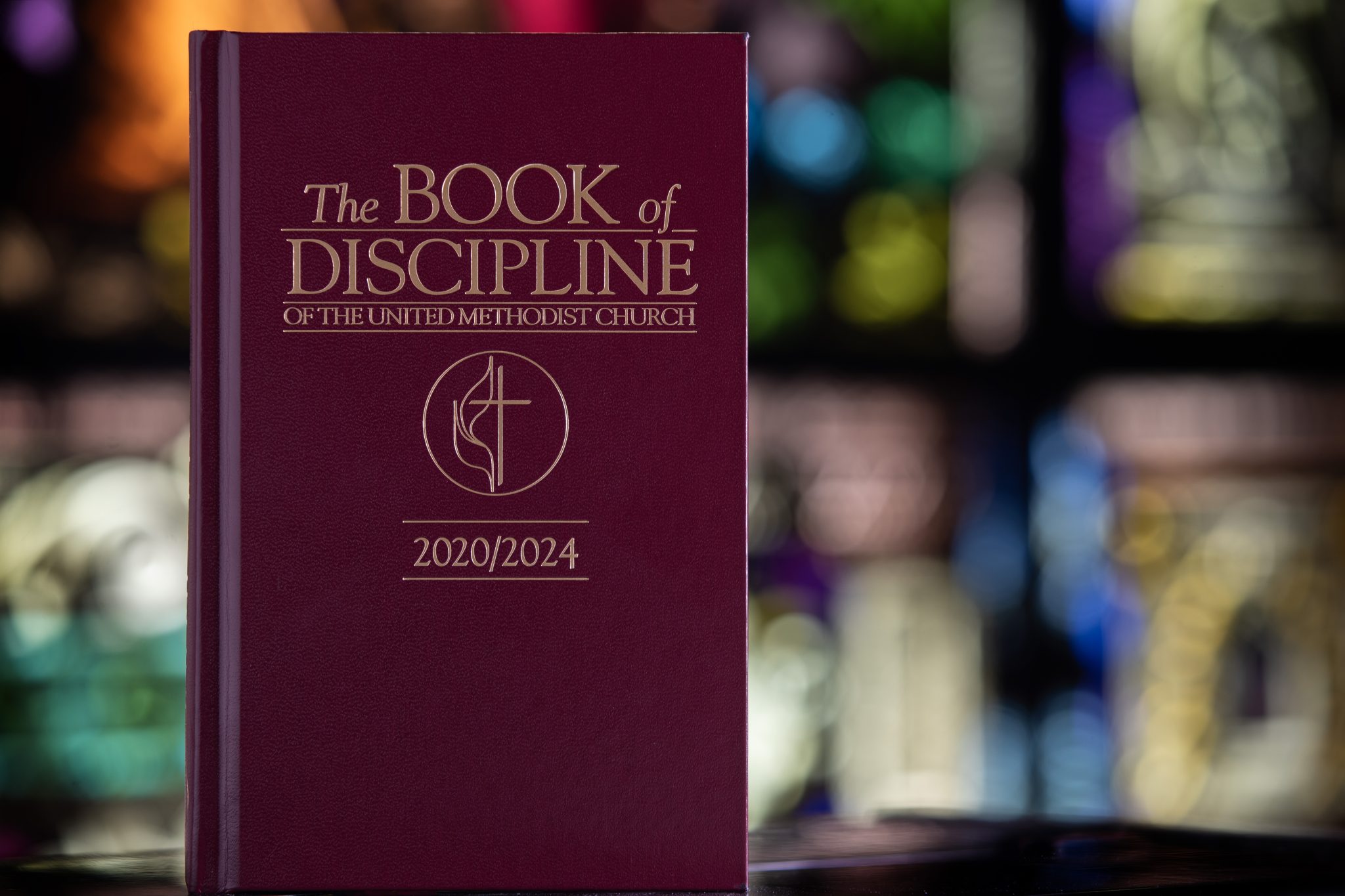
Paragraphs 14-23 and 501-512 in The Book of Discipline of The United Methodist Church (2020/2024) outline the official powers and duties of the General Conference, including how the meeting should proceed and the restrictive rules of what the General Conference shall not do.
Photo by United Methodist News.
What does a General Conference delegate do?
Delegates are the decision-makers at General Conference. They attend the full conference and vote on every report and request submitted by groups and individuals from across the United Methodist connection. Delegates spend the first week in legislative committees and the second in full session to vote on legislation perfected and passed in committees. Delegations meet throughout the year in the leadup to General Conference to prepare for the important work with which they are tasked.
Who can become a General Conference delegate?
Lay nominees must be members of a United Methodist church for at least two years and have been active in a United Methodist church for four years. They must be members of the annual conference electing them. Ordained clergy in full connection are eligible to be elected delegates.
How are delegates elected?
Delegates, equal numbers of clergy and lay, are elected at their annual conferences the year before (or in some cases, two years before) General Conference is to take place. Clergy vote for clergy, and laity for laity. The number of delegates to General Conference is between 600 and 1,000. The delegate count for each conference is based on the number of clergy and professing lay members of the conference in a formula laid out by Book of Discipline (¶511.5). The delegate count for the 2028 General Conference is 708.
How General Conference works
Learn more about the decision-making processes of General Conference in this helpful article from Ask The UMC, who also shares more about how General Conference delegates are chosen around the world.
Photo by Mike DuBose/UMNews.
What are the commitments for General Conference delegates?
Delegates commit time to delegation meetings, reviewing legislation, and attending General Conference and Regional Conference. Delegates in the U.S. will also attend a Jurisdictional Conference. Delegates commit to being open to the Holy Spirit and to believing The United Methodist Church has a role to play in building the kin-dom.
General Conference 2028 will meet in May 2028, followed by Jurisdictional Conferences in July 2028 and the U.S. Regional Conference in spring 2029. U.S. delegates in this quadrennium will be attending three legislative gatherings: 8 days of General Conference, 3-5 days at Jurisdictional, and likely around 5 days at the U.S. Regional Conference (this is yet to be determined).
How can I become a General Conference delegate?
Get involved! Serve on committees at your local church. Lead a Bible study, start a reading group, volunteer, serve as liturgist and guest preacher. Be active in your district and annual conference as well. Attend programs and events, join teams and committees (your annual conference surely has vacancies needing to be filled), write for your conference publications, serve as a lay voting member to annual conference, submit legislation to annual conference, and support the good work of others in your church, district, and conference. Be present and engaged. Make friends. Name recognition goes a long way.
Let people know you’re interested in becoming a delegate. Your conference United Women in Faith can be great supporters and cheerleaders, and don’t be afraid to seek endorsements and work with other groups in your conference to discern and nurture a “slate” of nominees that can bring multiple voices to the decision-making table, especially those voices that may be underrepresented. Be sure to check your conference rules about any campaigning restrictions.
Take current delegates out for coffee or a meal and ask them about their experience and insight. And be sure to thank them for their service!
Officially, you’ll need to follow your conference’s procedure for declaring your interest, which will likely include submitting a photo and some biographical information and answering some questions. You’ll also want to prepare a short speech. Deadlines for this information will be a few weeks to even a few months before your annual conference session so members get to know you before voting. Check your conference rules for the declaration procedure, or feel free to reach out to me.
Conference elections in 2026
Some conferences elected their delegates in 2026: Alaska, California-Nevada, California-Pacific, Desert Southwest, Iowa, New York, North Georgia, Oregon-Idaho, Pacific Northwest, and South Georgia, .Click on the links to see who was elected! United Women in Faith celebrates its 24 members elected over 9 delegations in 2026.
In this post we previously shared the deadlines and links to help members of United Women in Faith in these conferences get their names on their ballots, and we’ll do the same in 2027. You can also sign up for our Influence: UMC newsletter to receive news, information, and insight on how your voices can be heard in The United Methodist Church.
Get elected!
The General Commission on the General Conference has put together a helpful information packet for those considering becoming a delegate. Our friends at the General Commission on the Status and Role of Women also have some advice for how you can become a General Conference delegate, where they share what to consider as you discern the calling as well as tips for getting out there and getting involved. Check out their post.
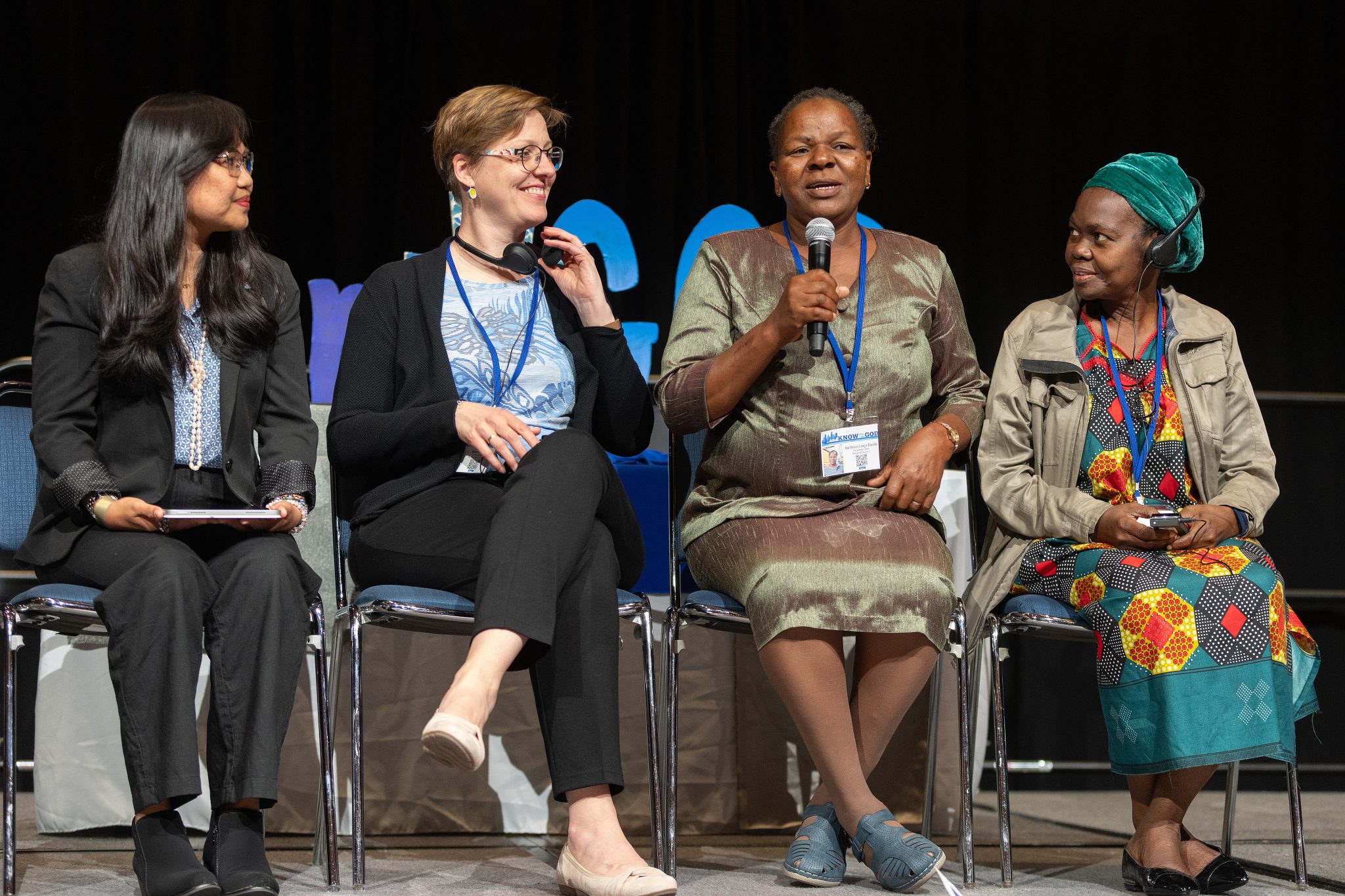
Photo by Mike DuBose/UMNews.
Why should United Women in Faith members become delegates?
Women’s voices are crucial to building the kin-dom and to our church knowing how to answer God’s call for our time. You have a vision to share.
The time you’ve spent at Mission u, Leadership Development Days, reading books from the Reading Program and articles in response magazine, calling your government representatives and attending your conference’s legislative events, learning at Assembly workshops and advocacy campaign webinars, gaining insight from Faith Talks and Voices from the Field podcasts, spending time in small groups doing United Women in Faith programs in person and online, taking United Women in Faith courses, volunteering in your community, caring for your soul all help make you excellent candidates to serve as General Conference delegates.
General Conference is a chance to travel, meet siblings from around the world, hear bishops preach every day, learn more about God and our call as United Methodists, build community in your annual conference. It is an amazing chance, especially in 2028, to shape the future of the church.
It is a chance to honor our foremothers and uplift women, children, and youth.
You are passionate, connected, bold, faithful, educated servant leaders able to listen and lead. And you have a supportive sisterhood in your corner. Let’s get you at the table.
Tara Barnes is director of denominational relations for United Women in Faith.
Cover photo by Paul Jeffrey for United Methodist News.
