

Latest News
Nov./Dec. response: Remembering Deaconess Clara Ester
Friends Recall Her Inspiration and “Unwavering Work for Justice”
by Audrey Stanton-Smith with Kathy L. Gilbert and Mary Catherine Phillips for UM NEWS
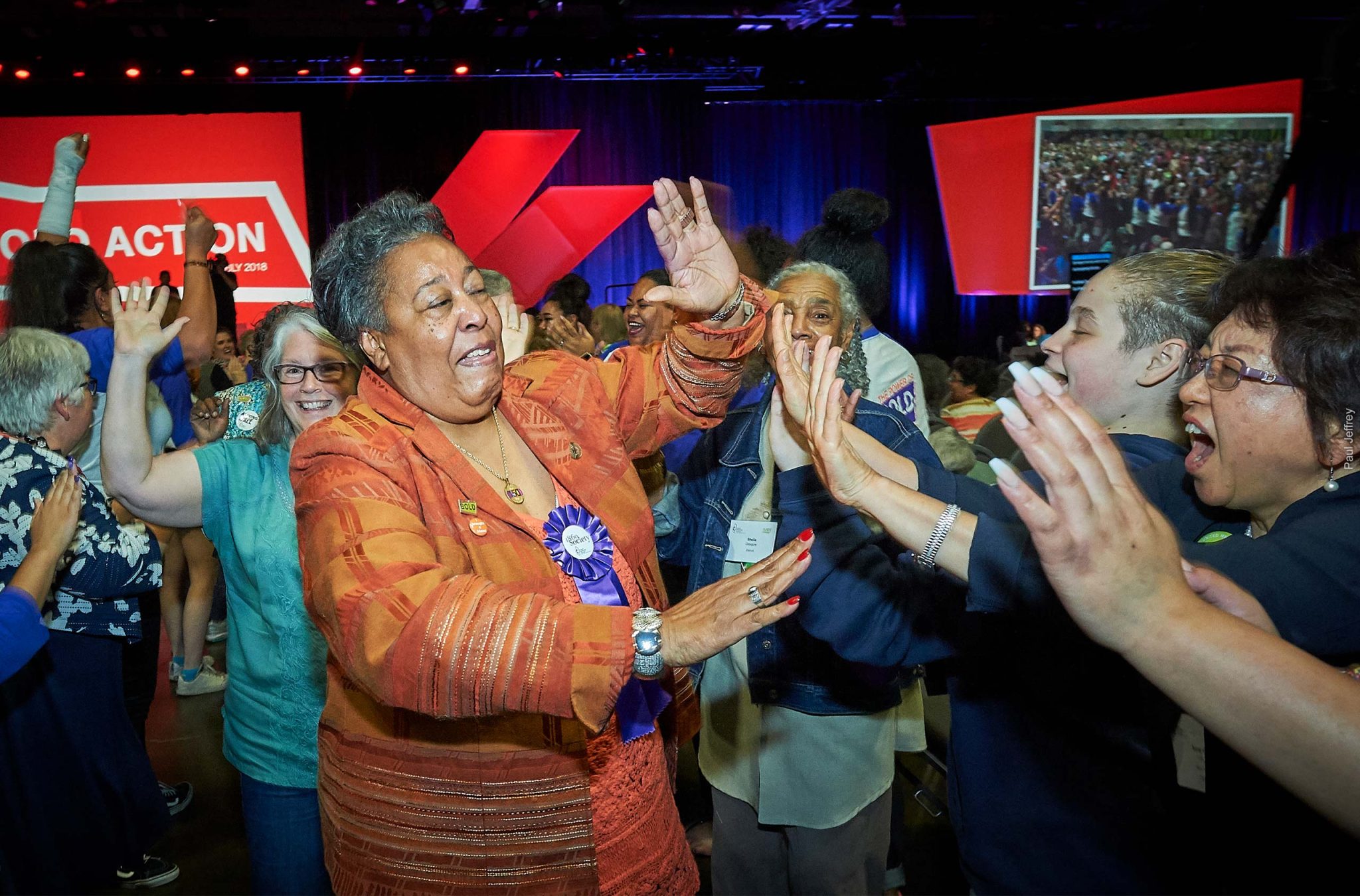
Photo: Paul Jeffrey
United Women in Faith lost a dear friend on July 9 when Deaconess Clara Ester passed away at the age of 77. Less than two months earlier, Ester had participated in Assembly 2026, vesting new deaconesses and home missioners and escorting civil rights icon and special guest Elizabeth Eckford.
“My cherished moment will forever be our last encounter at Assembly,” United Women in Faith General Secretary and CEO Sally Vonner said. “After we ended that Sunday, we embraced, and said to each other, ‘I love you.’ My parting words were, ‘May God bless and keep you until we meet again.’ We waved goodbye and parted.”
A deaconess since 1986, Ester also served as national vice president of United Methodist Women from 2016 to 2020. For 36 years, she worked for Dumas Wesley Community Center, a United Women in Faith National Mission Institution serving vulnerable individuals and families. She retired in 2008 as the NMI’s executive director.
Ester also chaired the Committee on Deaconess and Home Missioner Service before becoming chair of the National Association of Deaconess, Home Missioner, Home Missionary in 2020.
Beginning in 2024, she served on the Commission on Religion and Race during the current quadrennium. That year, she also represented the Alabama-West Florida Conference as a delegate to General Conference and the Southeastern Jurisdictional Conference. She also served as Mobile District lay leader, where she connected with United Methodists around the area. And anywhere justice needed an advocate, there was Ester.
But most know her name because of her association with the Rev. Martin Luther King Jr.
A Civil Rights Leader
At 19, Ester ran toward danger to offer aid to King on the day of his assassination in 1968.
From that day until her death at age 77 on July 9, she lived up to her vow to fight injustice.
“Today, there’s no kind of injustice—gay rights, immigration rights, whatever—that I don’t feel obligated to address,” she once told UM News of her experience.
Just as King inspired Ester, she has inspired many others.
Born and raised in Memphis, Tennessee, Ester was a lifelong United Methodist who grew up in a family dedicated to serving others. Her mother worked at the church’s Bethlehem Center, where Ester learned the importance of caring for the community.
Civil rights pioneer the Rev. James Lawson was pastor of Centenary United Methodist Church when Ester’s family attended in Memphis. He was Ester’s mentor and inspired her to pursue a life rooted in faith and service.
But it was the day that King was assassinated that she said changed her for life.
King came to Memphis to participate in the 1968 Sanitation Worker Strike.
“Dr. King came into the city early—April 3, 1968—and he met with ministers. It was thundering and lightning,” Ester remembered in an essay she wrote in 2016 for United Women in Faith. (Read Ester’s essay with our digital version of response on uwfaith.org/digital.) He was invited to speak at Mason Temple, Church of God in Christ, which would seat thousands, she said.
She remembered King’s words that night: “If you allow me to live just a few years in the second half of the 20th century, I will be happy.”
The next day Ester was pulling into the parking lot at the Lorraine Motel when she heard a blast “like a truck backfiring.”
“It was gunshot. I saw Dr. King thrown up in the air and then back down, hitting the pavement. My friend Mary Hunter and I took off running up the stairs toward him. He was breathing but very slowly. I unbuckled his belt to help. His eyes were open. On the side of his head and neck was a pool of blood,” she wrote.
That day marked her for life.
Ester moved from Memphis to Mobile, Alabama, where she attended Toulminville-Warren Street United Methodist Church, deepening her faith and her lifelong commitment to justice and advocacy.
A Lifetime of Service
Vonner first met Ester at a Leadership Development Days event.
“Her name and legacy preceded her before she arrived,” Vonner recalled. “After hearing her keynote speech, I knew I wanted to get to know her because of the truthfulness and power she spoke. Over the years we became friends, until her death.”
Vonner called Ester “a faithful and committed member of United Women in Faith for many years.”
“She showed up in leadership at various levels and as a deaconess and member of our Racial Justice Charter Support Team for the Southeast Jurisdiction,” Vonner said. “She was faithful in service with the UMC as a General Conference delegate and serving as board member for several general agencies. She was a leader whose presence spoke volumes whether she spoke or not.”
And one thing Ester did very well was give assignments.
“I’m sure because she felt it would bring value to our lives,” Vonner recalled. “I’m grateful she lived to see me complete my assignment, which was to visit the Equal Justice Initiative museums in Montgomery, Alabama. For others the assignment may have been to pursue being a deaconess or home missioner, or something else. Whatever one’s assignment, if not completed, I’m sure that Deaconess Clara Ester still expects you to do it.”
Celeste Eubanks, director of Candler Center for Christian Leadership at United Methodist Candler School of Theology, had one of those assignments, too. Eubanks said she is a deaconess because of Ester.
“She saw something in me long before I fully saw it in myself and challenged me to ‘do something’ to use my gifts to make a difference in the world. That invitation changed the course of my life,” Eubanks said.
Deaconess M. Garlinda Burton, retired head of the United Methodist Commission on the Status and Role of Women, called Ester a mentor.
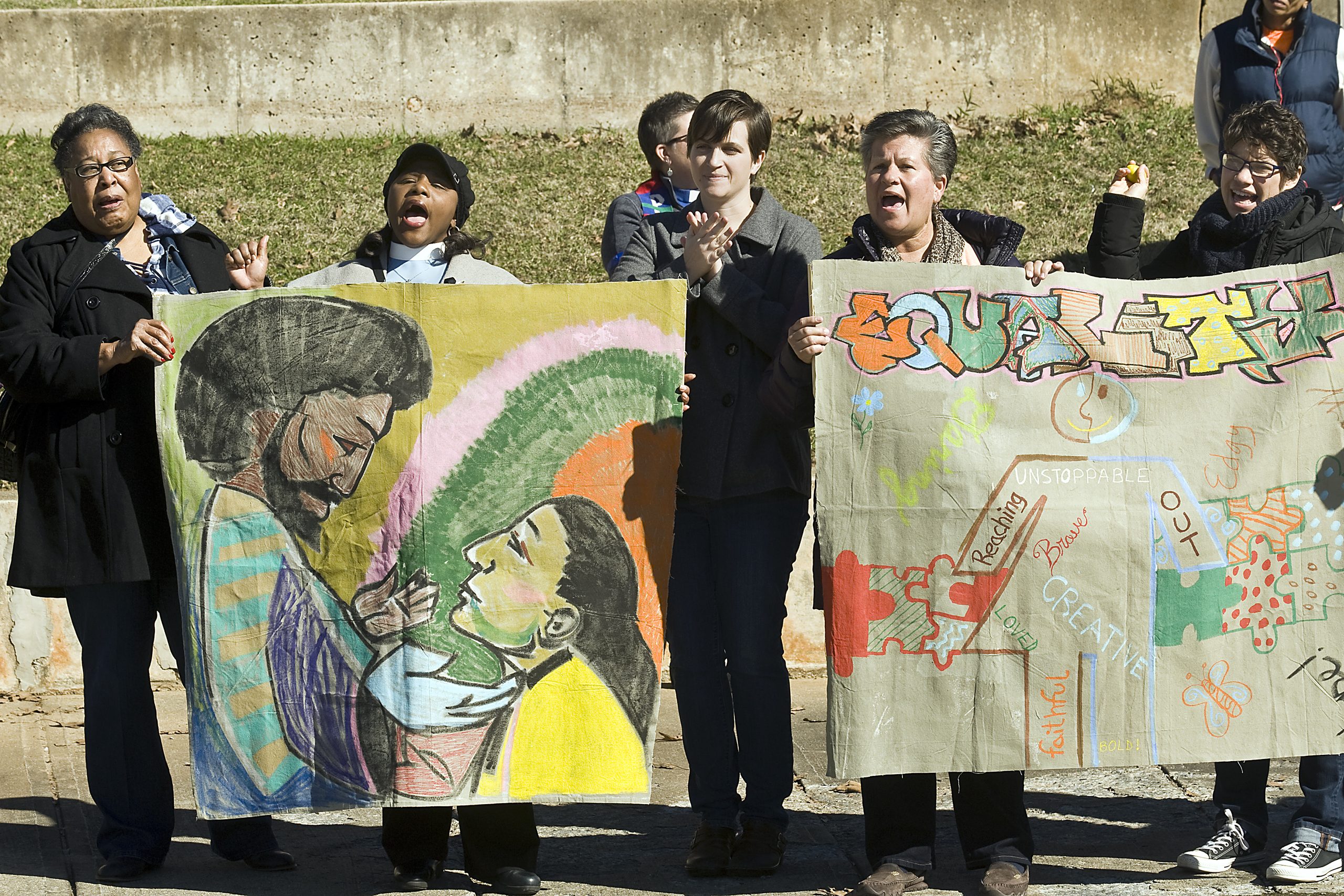
Photo by Paul Jeffrey.
“Clara remained relevant in her ministries across the decades,” Burton said.
Ester also worked as a United Methodist Commission on Religion and Race volunteer monitor for the 2016 General Conference while Burton was working with the agency.
“She connected with people of all ages with her message of Jesus’ love and justice,” Burton said. “My faith is stronger because of her example.”
Deaconess Sung-ok Lee, United Women in Faith’s connectional officer, said Ester “exemplified living as a ‘foot soldier of hope’ for the community and encouraged that we live this out as well every day.”
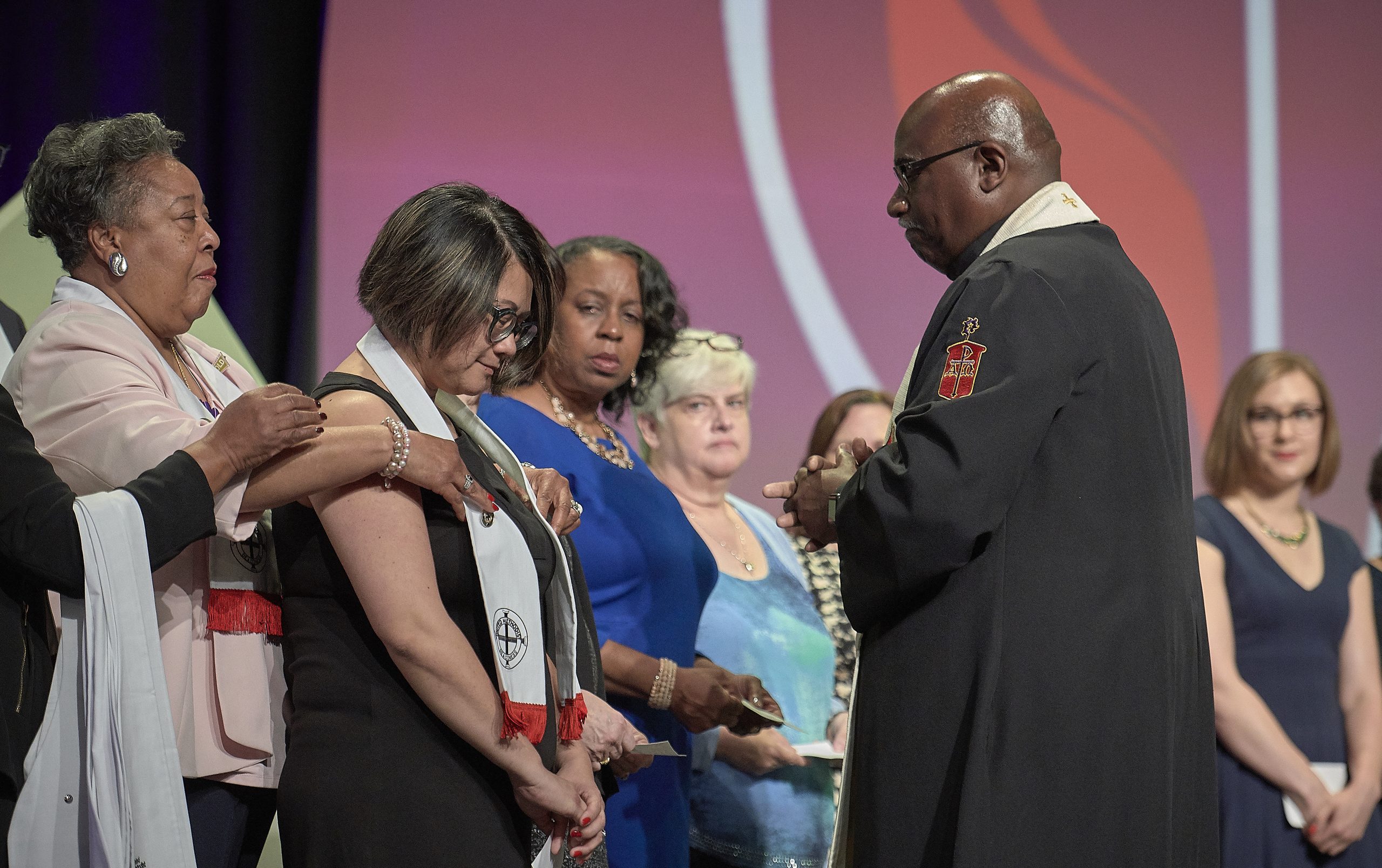
Photo by Paul Jeffrey.
Megan Hale, United Women in Faith’s executive for its Office of Deaconess and Home Missioner, said Ester inspired those who followed in her footsteps.
“Many of us are who we are today because of Deaconess Clara Ester,” she said. “By sharing stories of her own experiences and through her unwavering work for justice, Clara taught us what it means to be deaconesses and home missioners, how to find strength and courage through community, how to listen deeply and be in solidarity with others, and how to respond when our faith calls us to act.”
Deaconess Christi Campos, United Women in Faith’s executive for Development and Donor Relations, said knowing Ester was a blessing.
“You knew if Clara was speaking, you should listen because you didn’t want to miss out on her wisdom and experience,” Campos said. “She had a way of making everyone feel special when she spoke to you one on one.” (Read Campos’ article about Ester’s gift to The Legacy Fund in the Impact section of this issue.)
A “Courageous Witness”
The world knew Ester for her courageous witness at the intersection of God’s love and justice, said the Rev. Emily Kincaid, head of the Alabama-West Florida Conference’s delegation to the 2024 General Conference.
“But those of us who knew her personally also knew her humor, her joy, and her wonderfully playful spirit. Clara endured profound hardship and confronted injustice throughout her life, yet she never became hardened or lost sight of what mattered most: loving God and loving her neighbors as she loved herself. She carried that calling with grace and an unexpected lightness,” Kincaid said.
Harriett Jane Olson, retired top executive of United Women in Faith, said Ester was a respected and formidable advocate for women, children, and youth.
“She was one of those people who knew much more than she said, and what she did say was both worth waiting for and worth remembering.”
Olson said knowing and working with Ester was a blessing.
“She gave unstintingly of her time and energy to organizations doing work that was important to her. What a blessing to me and to so many others that United Women in Faith was one of them.”
Even those who didn’t get to know Ester well feel her lasting impact.
“Clara inspired so many people,” said United Women in Faith National President Jana Jones. “Sadly, I did not get to know her personally, but I know the impact she has made as almost legendary. Everywhere we look within United Women in Faith and the UMC, Clara Ester seems to have left her footprint. She has truly left a legacy, and we are blessed and grateful to have had her among us.”
“She touched countless lives through her ministry with the Deaconess-Home Missioner community, as executive director of Dumas Wesley Community Center, and her service and leadership in The United Methodist Church,” Vonner said. “She was a dear friend who I will carry in my heart forever. I am grateful that so many of us got to interact with her at the recent Assembly in Indianapolis.”
Pat Luna worked alongside Ester as a delegate to The United Methodist Church’s General Conference in 2012 and 2024.
“Micah 6:8 was written on Clara Ester’s heart,” Luna said of her friend. “She taught us that justice without humility is incomplete, and kindness without action is insufficient. She lived all three with extraordinary grace.”
AUDREY STANTON-SMITH is editor of response. KATHY L. GILBERT is a freelance writer in Nashville. MARY CATHERINE PHILLIPS is director of communications for the Alabama-West Florida Conference. Portions of this article originally appeared in a UM News article by Gilbert with contributions from Phillips. Read that article and more about Ester at: umnews.org/en/news/remembering-civil-rights-advocate-clara-ester.
