

General Conference
Leading the church into the future
The Council of Bishops Leadership Gathering meets to discern faithful path forward
by Tara Barnes
The 2026 United Methodist Leadership Gathering hosted by the Council of Bishops came to a close Saturday October 24. Participants gathered in Calgary, Alberta, Canada, for four days for worship, learning, and conversation.
Covenant cohorts were organized around the focuses of discipleship, leadership, impact, stewardship, and accountability. Each cohort was then divided into subgroups focused on innovative discipleship formation, empowering younger generations, and amplifying global voices. A virtual cohort met as well.
“I believe God placed me in this space to gain a clarity I might not otherwise have received,” said Deaconess Celeste Eubanks, who was selected to represent the Alabama-West Florida conference by Bishop Jonathan Holston. “From the moment I received the invitation to attend, I sensed there was a purpose behind it—something God wanted me to see and experience. With this lived experience comes a responsibility to ‘lead courageously’ or, in the words of my dear mentor, Deaconess Clara Ester, to ‘do something.’”
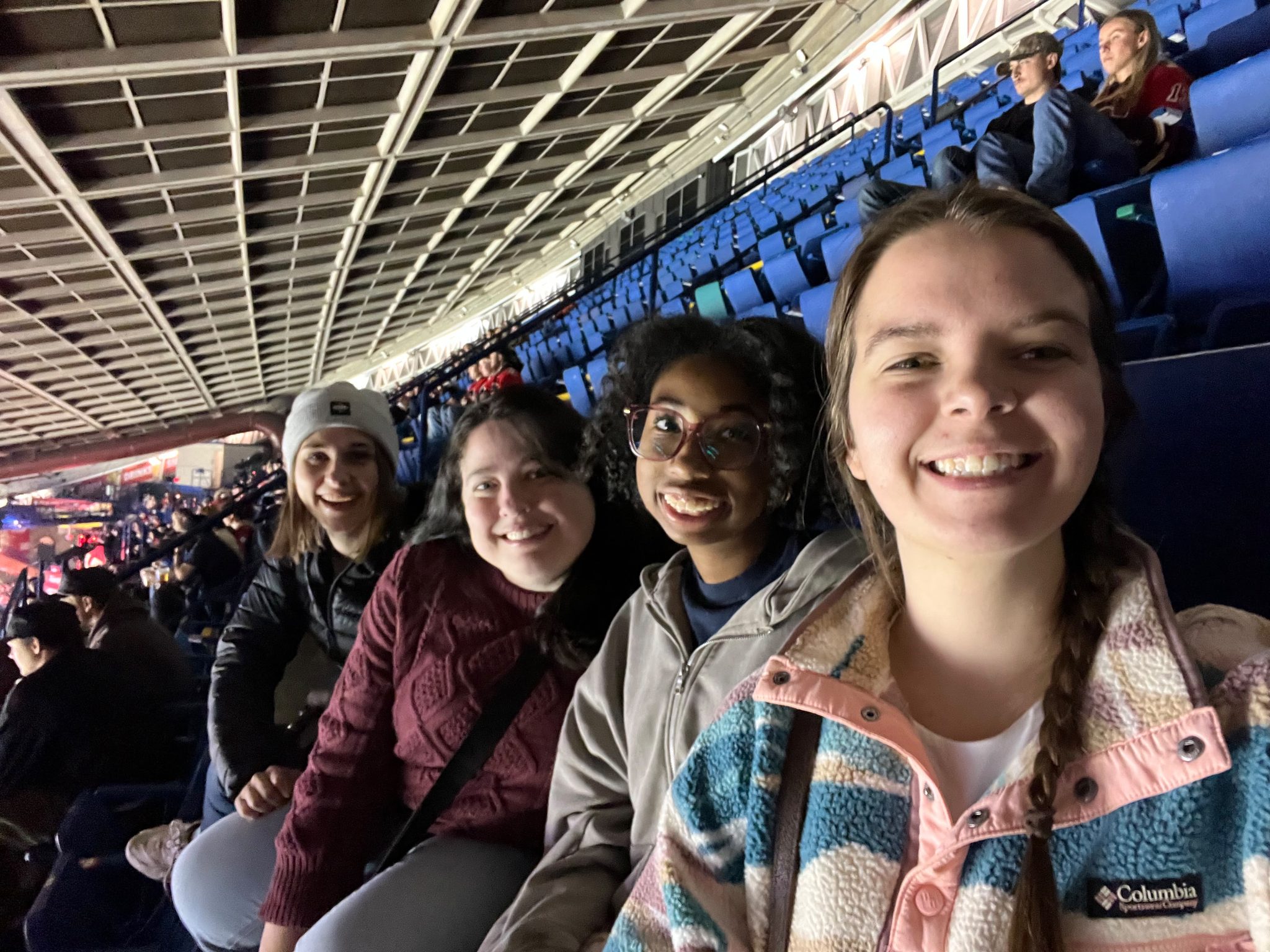
The first day centered on the topic of naming the church’s realities, the tensions caused by them, and the opportunities emerging from them. The second day focused on diagnosing those realities and visioning for the future. The next step for day three was to come to a consensus as a group about what practices should continue and what practices the church may need let go. At the end of the third day, each group shared one recommendation to help move The United Methodist Church toward a faithful future.
You can watch the presentations of these final recommendations via the livestream recording, or you can read them here.
A community of Christ-like believers
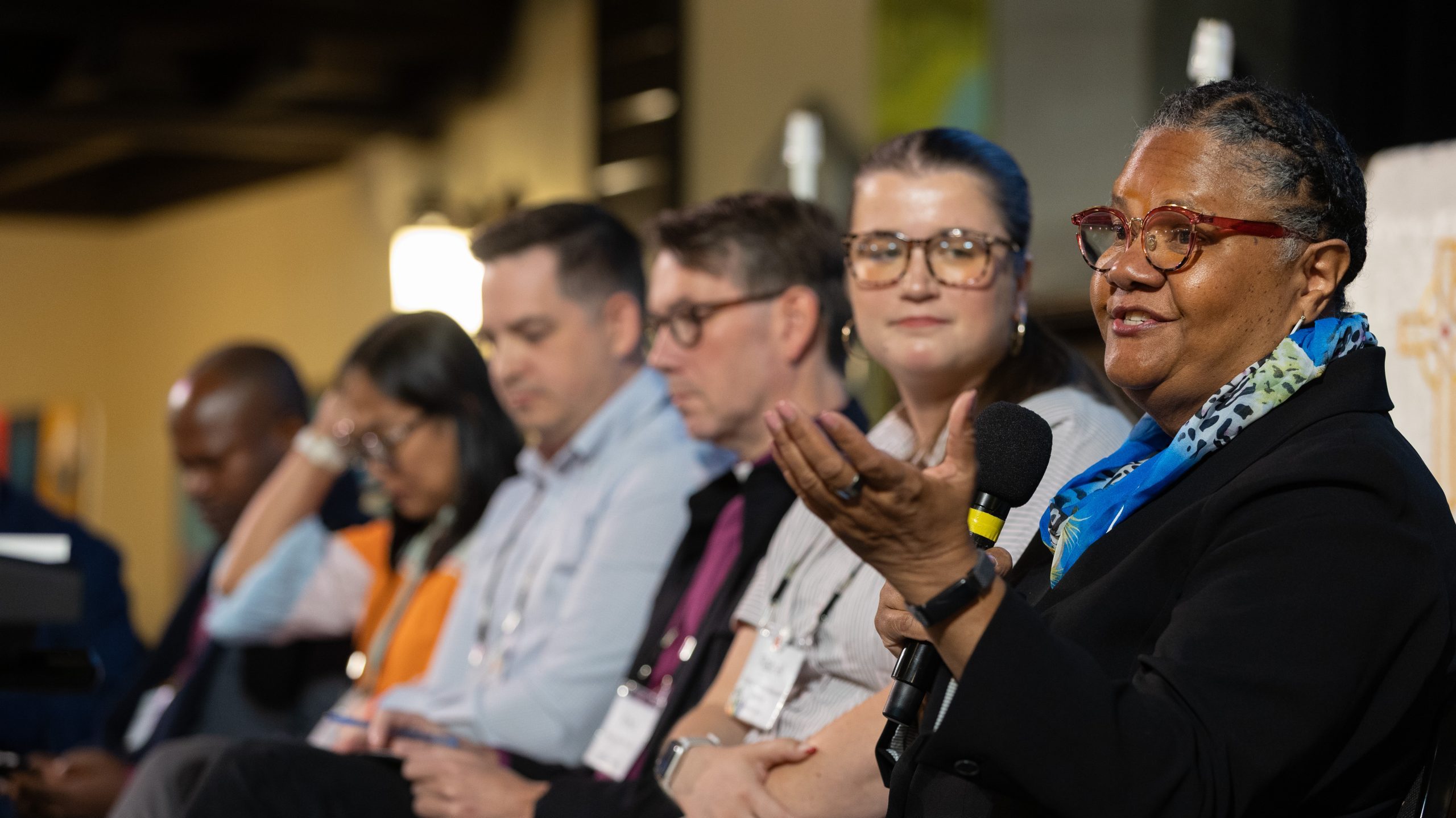
The Saturday plenary featured a panel that included Jennifer Ferariza-Meneses, United Women in Faith mission liaison from the Philippines, and United Women in Faith General Secretary and CEO Sally Vonner.
Reflecting on the recommendations, Vonner said, “I heard in the 2050 Dream Statements a desire for our church to be fully inclusive, an equitable community of Christ-like believers that welcomes disciples and values the gift of every generation to be leaders, stewards, and decision-makers, with priority for the most vulnerable and marginalized among us to be in that imagining and living-out. I leave here today confident and hopeful, because our discernment together made evident to me our shared desire to put ministry and mission above numbers and buildings.”
Ferariza-Meneses reminded participants that the church is not sustained by us but by God, that leadership cannot be about maintenance, and that an inclusive church does not leave people standing at the threshold.
“For us, people called United Methodists, this is not a call to abandon who we are but to return to our Wesleyan core, the scriptural way of salvation and the holiness that loves God and neighbor,” she said.
“It means practicing both works of piety—prayer, scripture, the Lord’s Supper—and works of mercy: Feeding the hungry, welcoming the stranger, and seeking justice. Together, never one without the other, they are the breath of the movement, the Spirit’s own breathing in and through us.”
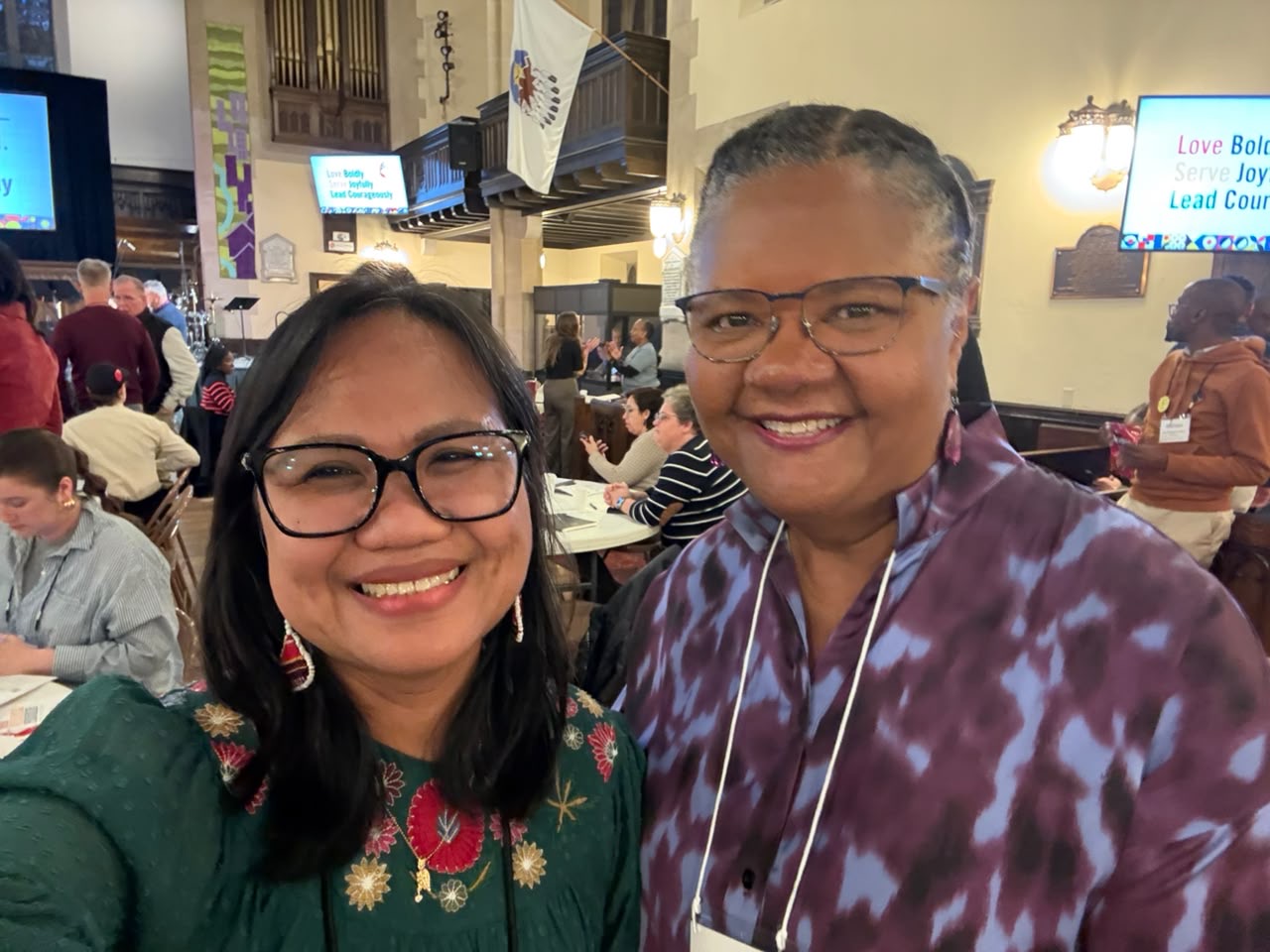
In addition to Vonner, United Women in Faith was present through member leaders like Eubanks and others selected by their bishops to participate.
News sharing and monitoring
The meeting was closed to visitors and observers. United Methodist News was onsite for daily reporting, and the General Commission on the Status and Role of Women were also in Calgary for monitoring. The following links lead you to their reports: Day 1, Day 2, Day 3, and Day 4.
The livestream broadcast morning worship sessions and morning and afternoon plenaries.
United Women in Faith hosted a WhatsApp chat for laywomen participants, especially as the gathering was majority clergy and majority male.
Reconciling Ministries Network and the Love Your Neighbor Coalition were in Calgary to hear from participants and encourage them to challenge exclusivity. LYNC posed the following questions to those chosen to attend: Who is still being asked to hide, wait, or change before they can fully belong? Will we share power, resources, and decisions in truly mutual global relationships? and What will we risk to confront colonialism, Christian nationalism, authoritarianism, war, crimes, and exploitation?
Reconciling Ministries Network offered real-time livestream summaries and commentary throughout the event. You can find them via the WhatsApp Community, which they have also collected into one document.
When God calls, will the church hear?
Deaconess Leah Wandera, the Africa Region Coordinator for Office of Deaconess and Home Missioner, was a featured speaker on Friday morning, joining remotely. Wandera also facilitated the online cohort.
She spoke about the first ever consecration of deaconesses and home missioners in The United Methodist Church on the African continent, which took place in Moshi, Tanzania, as part of the Diakonia World Federation Assembly.
She shared the story of waking up at 3 a.m. to join an online discernment event from Mutare, Zimbabwe.
“I listened as they talked about this calling of laypeople. I listened carefully to the mandates summarized as love, justice, and service. Then I said to myself, ‘This is what I have been looking for!’” Wandera said.
She was the only participant from Africa in that virtual gathering, and she realized there was no established pathway for becoming a deaconess or home missioner in Africa. After going through the Kenya-Ethiopia Conference board of ordained ministry to be commissioned a deaconess, she learned that was not the proper process. As a lay ministry, and a historic movement begun by women, the Office of Deaconess and Home Missioner is administered by United Women in Faith.
“When God called, the Holy Spirit gave me persistence,” she said. “Sometimes leading courageously does not mean breaking down the door. Sometimes it means saying, ‘Show me the right door. I am still coming.’”
After attending her Theology of Mission class with other deaconess and home missioner candidates she realized, “Calling may be personal, but formation is communal.” She went on to attend Drew Theological Seminary
“What happens when a people are present in the church but absent from the story the church tells about its ministry?” she asked. “My journey was no longer about becoming a deaconess; I began to envision how a larger story could be written.”
In 2022 she was consecrated a deaconess, and by 2024 three more Africans, from Zimbabwe, Malawi, and Tanzania, were consecrated as deaconess and home missioners. The movement in Africa was taking shape, Wandera said. Fifteen deaconesses and home missioners were consecrated in Tanzania in 2025.
Today there are 19 active deaconesses and home missioners in Nigeria, Tanzania, Kenya, Zimbabwe, and Malawi along with 40 candidates across English, French, and Portuguese language cohorts and 10 young adults in formation, including the first African students attending Harris Memorial College in the Philippines and others at Africa University.
One doesn’t need to work directly for the church for a vocation to be a ministry, she shared, offering fields such as agriculture, education, health care, psychology, and community organizing as examples of ministry happening outside church walls.
“In 2017 I asked, ‘How can I become a deaconess?’ Today I ask, ‘How many people is God already calling whom the church has not yet learned how to recognize?”
A covenant to keep working
Deaconess Christina Krost attended as a representative of the Illinois Great Rivers Conference in the United States.
“It’s hard to put into words how meaningful this week in Calgary has been,” she said after returning home in time to attend her daughter’s dance recital. “The fact that the UMC wanted to hear from clergy and laity from around the world, with one-third of participants being under 35, and facilitated a way to do that in community is to be commended. There were voices left out and voices centered that ought not have been, but we have covenanted to keep working. I think The United Methodist Church’s best days are ahead.”
Participants heard various speakers throughout the event who offered insight and inspiration on the topics named as focuses. This gathering began as a called special session of the General Conference to take place in May 2026 then shifted to a leadership event to be held in April 2026, then shifted again to ultimately take place this October in Calgary, Alberta, Canada.
“Leaders in a resurrection narrative tell the truth, they grieve honestly and then they point to the empty tomb and say, ‘Go, because Christ is ahead of you,’” said Ferariza-Meneses during the Saturday morning panel. “The first witnesses to the resurrection were not people of power or position. They were Mary Magdalene and the other faithful women who showed up, afraid and amazed and were sent.
“That is still how movements begin. Confession, doxology, resurrection. Yes, together we have imagined and we will carry on imagining a church yet to be,” she said.
The Council of Bishops published a press release summarizing the event. Photos from the gathering can be found on United Methodist News Flickr site.
When asked during the closing panel whom the church is at risk of forgetting, whose voices need to remain present, Vonner named laywomen.
“I believe that women bring a different set of eyes and perspective, because we lead with our hearts. We lead, I think, with love in pretty much every situation. And that’s something that’s needed as we move along this journey, that perspective and that ability to look beyond what’s right here to see what might be possible going forward,” she said. “Women, girls, young women, wise older women, bring wisdom and understanding into these spaces of continued dreaming and reimagining who we want to be.
“The baton is in our hand. We want to hand off a legacy of thriving, a legacy of continuing the good works that our foremothers handed off to each generation. So I’ll say to each of you, the baton is in our hand. Don’t drop it.”
Tara Barnes is director of denominational relations for United Women in Faith.
Cover photo by Mike DuBose for United Methodist News.
