

Latest News
Sept./Oct. response: “In This to Serve”
Abrams Mother-Daughter Duo Emphasizes Social Justice
by Audrey Stanton-Smith
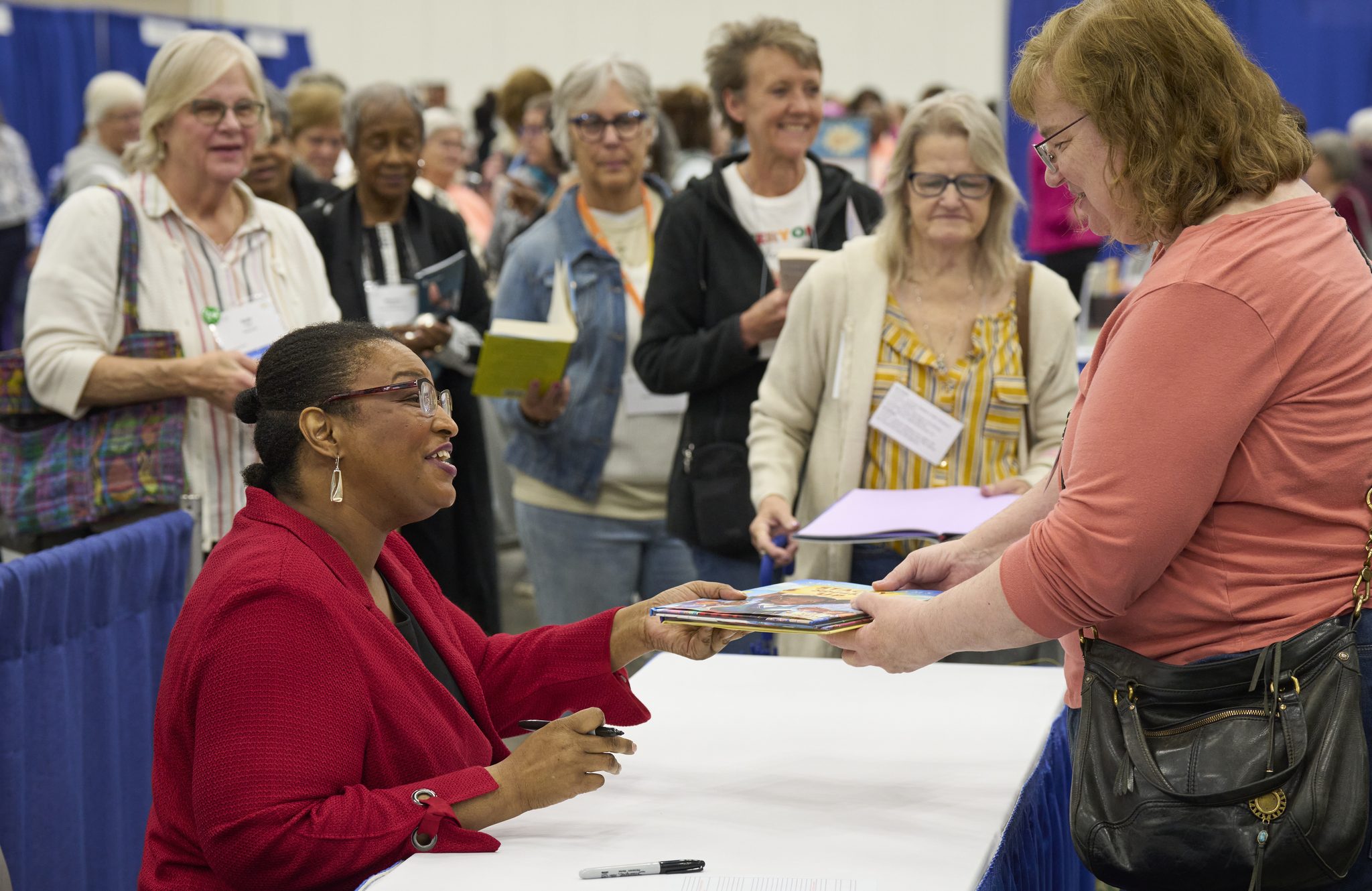
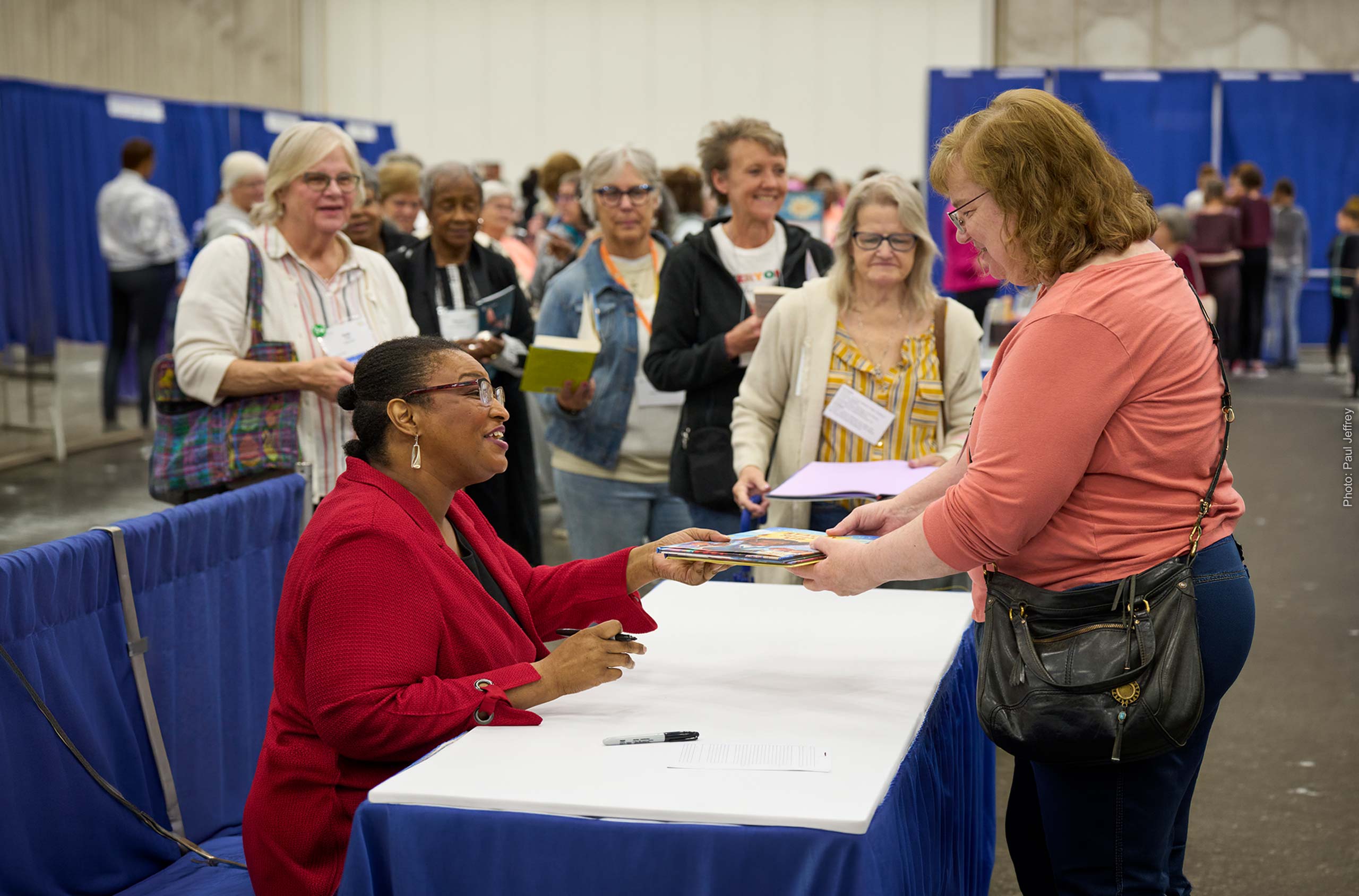
Photo by Paul Jeffrey/United Women in Faith.
Voting rights champion, author, and political leader Stacey Abrams and her mother, retired pastor Carolyn Abrams, inspired United Women in Faith members and guests during Assembly 2026 with a message about faith leading to action.
Carolyn Abrams, who holds a Master of Divinity degree from Candler School of Theology, credits United Women in Faith for “whetting her appetite” to serve. When she heard a United Methodist woman talk about social justice, she began attending United Methodist Women meetings, even though she was still a Baptist at the time. So, it was service that drew her to join The United Methodist Church and, later, to add a divinity degree to the master’s degree she already held in library science, she explained in an onstage Q and A hosted by United Women in Faith General Secretary and CEO Sally Vonner.
“My Parents were 40 years old when they decided to go to divinity school, and they could not type,” Stacey Abrams said. “I became their typist.”
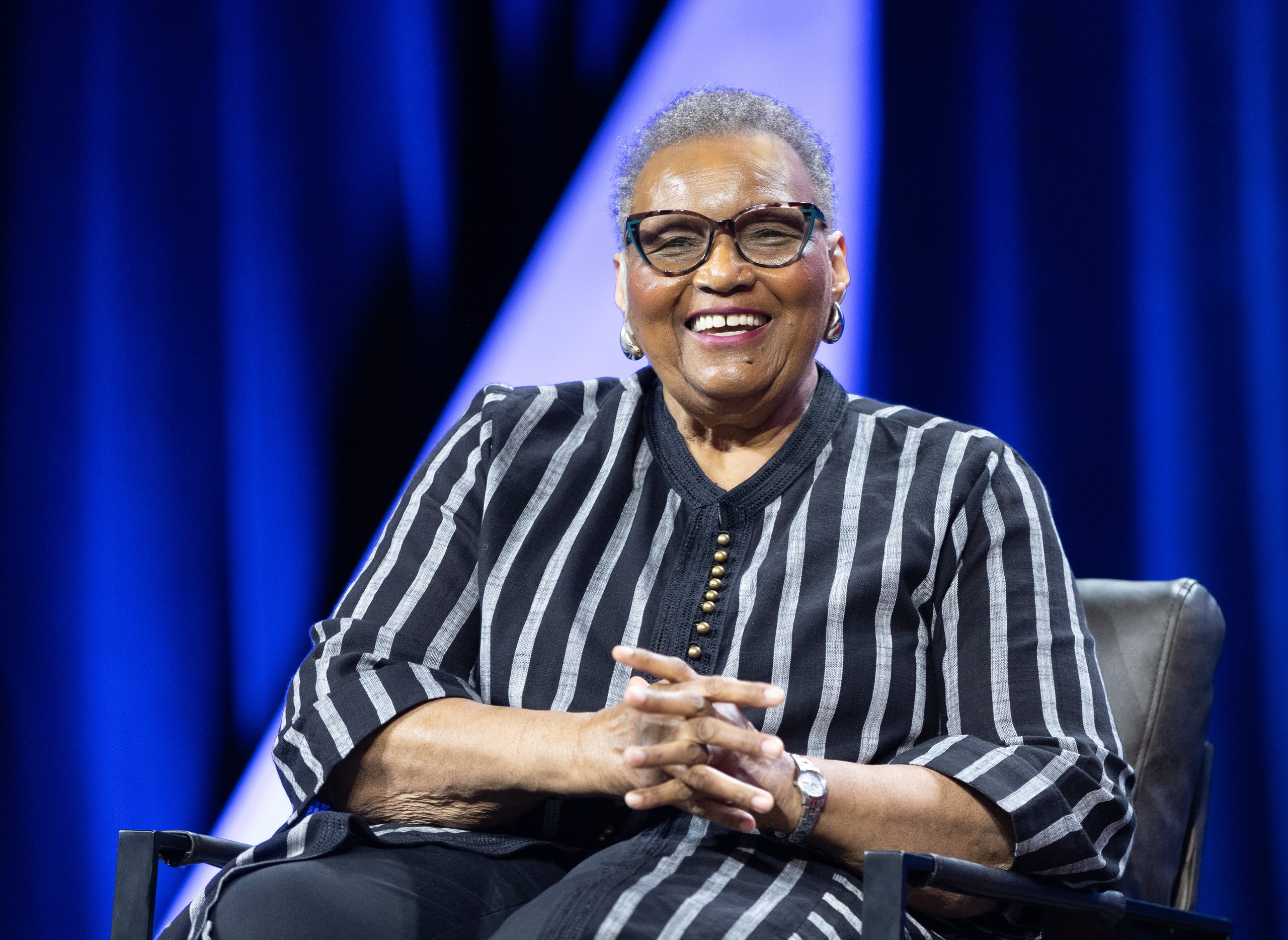
Photo by Mike DuBose, United Women in Faith.
She and her five siblings also became young social activists, watching and joining with their parents as they championed for justice. Once, when they were protesting South Africa’s apartheid, a young Stacey thought she was supposed to block the Shell gas station entrance with her sign. Her mother had to tell her they could still let people use the door.
“United Women in Faith (members) are always growing in your faith and growing in your service, and I watched that with my mom,” Stacey Abrams said. “They taught me this external responsibility, that you could not see the world and not do your part.”
Both Abrams women said their faith is what leads them to act.
“The work of civic engagement is not about partisanship, it’s about people-ship,” Stacey Abrams said. “And people-ship means that you’re in this to serve.”
That means ensuring human rights—healthcare, housing, food—are met, she said.
“In the Scriptures we are taught that when we see a need, we meet that need,” Carolyn Abrams said. “There is no partisanship in need. Need is need.”
Those beliefs and Stacey’s connected passion for voting rights have resulted in public backlash and criticism in recent years, and Vonner asked her about it.
“Occasionally people don’t like me,” Abrams said as the audience laughed. “One of the ways I learned to navigate that was watching my mother as a Black woman pastor in the Deep South. I watched men of God tell her she was not allowed in the pulpit.”
Instead of expressing anger, Carolyn Abrams stayed grounded, her daughter explained.
“My mother made sure that people understood the choices that they were making, and she did it with this civility and politeness but also a courage that said, ‘you will not take from me what the Lord has called me to do,’” she said. “You’re not mad at me, you’re mad at the justice that I’m trying to fight for. … But courage isn’t belief; courage is action.”
Carolyn talked about the challenges she faced as a pastor in the Mississippi United Methodist Conference, but she also said those challenges provided a platform for people to begin to help people see what they needed to do.
“We are obligated to speak truth to the power and to make change,” Carolyn Abrams said. “Change will not be made if we don’t speak out, if we don’t put ourselves on the line.”
Both women are committed to speaking out for racial justice, diversity, equity, and inclusion, they said, because they believe it is scriptural.
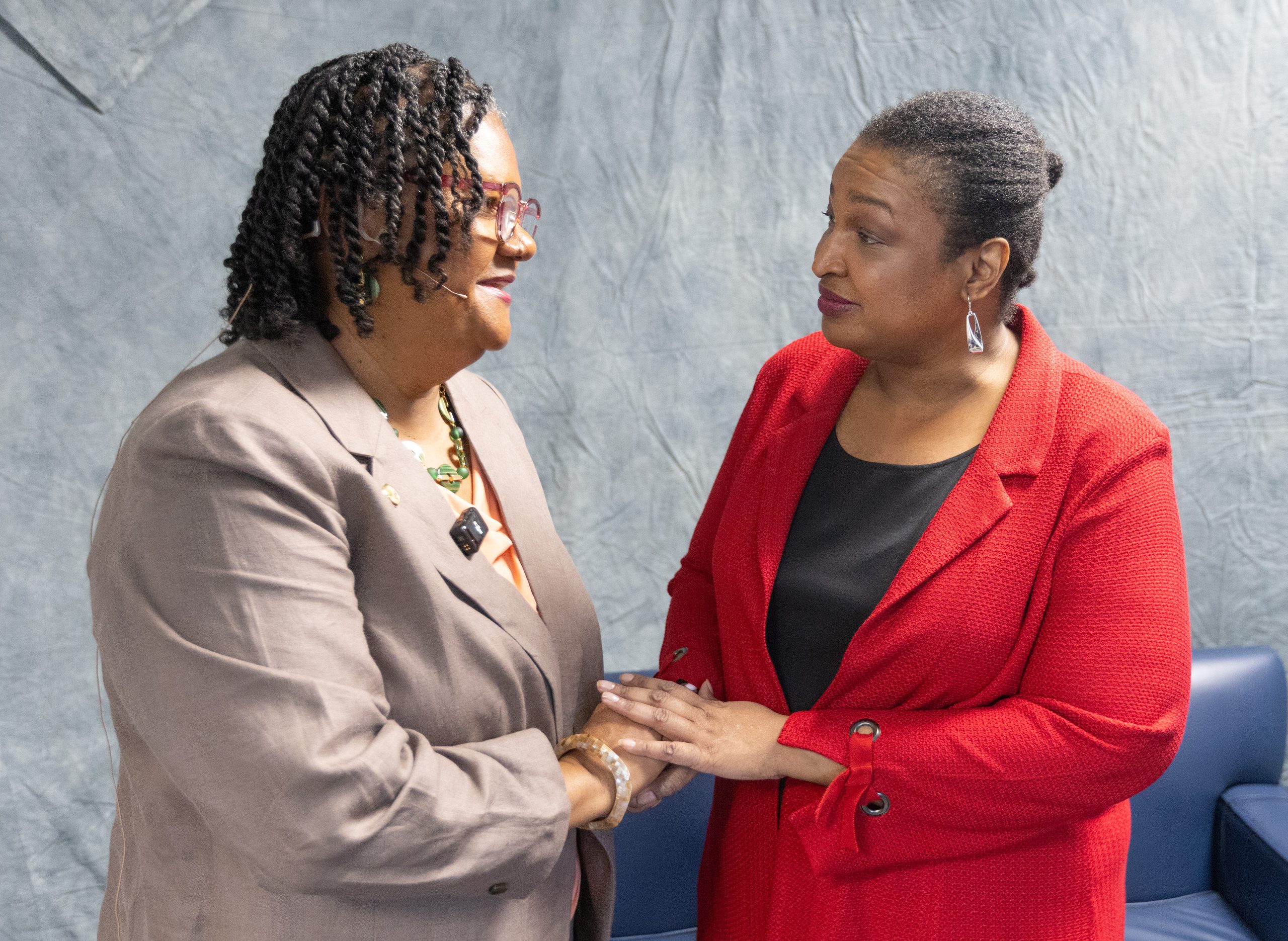
Photo by Mike DuBose, United Women in Faith.
“My hope is that we cease to have to count the women in leadership,” Stacey Abrams said, before sharing a story about Iceland, where women have held leadership positions for so long that a young boy asked if there would be a day when a man could be president.
“It shouldn’t be a question of can a man do it or can a woman do it. It should be who can do it, and that’s when women’s equality will become truly realized,” Stacey Abrams said.
She also addressed recent policies on immigration, the recent “deading” of the Voting Rights Act, and “subsequent attempts to gut Black and Brown voting power.”
“There’s a question of race neutrality, that these laws aren’t being changed because of race, but simply because it’s partisan,” Stacey Abrams said. “But there is no difference between those who claim gender neutrality or race neutrality when what you do is use a person’s gender or race to deny them power, access, and their rights.”
So, she said, she carries her faith into the public sphere and feels a responsibility as a leader to stand up for those who need a voice. For instance, in college, at Spellman, she advocated for an LGBTQ+ organization to have a space to gather, even though she was straight.
“My parents taught us our faith is a shield to protect; it is never a sword to strike people down,” Stacey Abrams said.
“She’s been doing this for a long time, in different ways,” Carolyn Abrams said, sharing other examples of her daughter standing up for those in need.
Stacey Abrams credited her parents for teaching that whatever power they may have, there are some with less and that her job is to serve those people.
“What resilience looks like is sitting next to me,” she added, talking about her mother’s accomplishments, among them raising six children and merging three churches, then building a new one, all while battling racism in southern Mississippi and in the Church.
“My mom said you meet people where they are, not where you want them to be, but she also said, once you meet them there, move them to where you want them to be,” Stacey Abrams said.
So, how do you do that? Vonner asked.
“The first step is knowing what we face,” Stacey Abrams said. “There are 10 steps to authoritarianism and autocracy, but there are 10 steps to freedom and power. That first step is the step I watched my parents take every single day; that is to commit yourselves to that work. Then the next step is to share what you know. Then you organize, you mobilize, you litigate, you argue with me.
“You then disrupt,” she continued. “You deny them the complacency of saying ‘you have a seat, just sit there.’ People might tell me where to sit, but they can’t tell me how long I have to stay there. Then you have to engage and you have to elect, and ultimately you have to demand the change you need to see.
“I learned that from watching my parents. I learned that from watching my mother. And my responsibility and what I would say to all of us is that we know what we face, but we have to do what we must, and that is why God is calling us to this space.”
Carolyn Abrams said her heart has been broken by the erosion of voting rights and other things many people have taken for granted for the last 50 years.
“But you attack injustice every time you see injustice,” she said. “Speak out. … I remember that this is a group that is making a difference in the world. Don’t get stymied now. Remember who is really in charge of this world.”
Audrey Stanton-Smith is editor of response.
